
Botanical impressions

No matter the extent of human evolution, the replacing of one’s instincts and urges with rules and regulations, humanity never forgets its roots, deeply ingrained in nature. Aside from having jobs and the ability to communicate, the thing that sets humans apart from other beings is the introduction of change into nature for personal gain; in contrast to other animals, humans try to rule over it. However, no matter the severity of the change, the only success that is achievable is one that is temporary and tangible precisely because man emerged from nature and not the other way around. From everything written thus far, it shouldn’t come as a surprise that man often “returns” to nature and draws endless inspiration from it.
When speaking about inspiration coming from nature, its products could be a) intellectual or material b) for the purpose of survival or as an act of one’s own volition i.e., one’s free time. If man had unlimited free time, the product of production would be less often replicated (multiplicated, copied) and human beings would strive for more originality. Free time isn’t necessarily in opposition to worktime; it refers to true freedom wherein an individual isn’t burdened by physical value, but rather the abundance of experience they gain from investing their time, effort and prior knowledge into creating a product. Such a product, which comes from an individual that works “on their own volition”, is made according to the principle of μεράκι (Greek, meráki; passion).
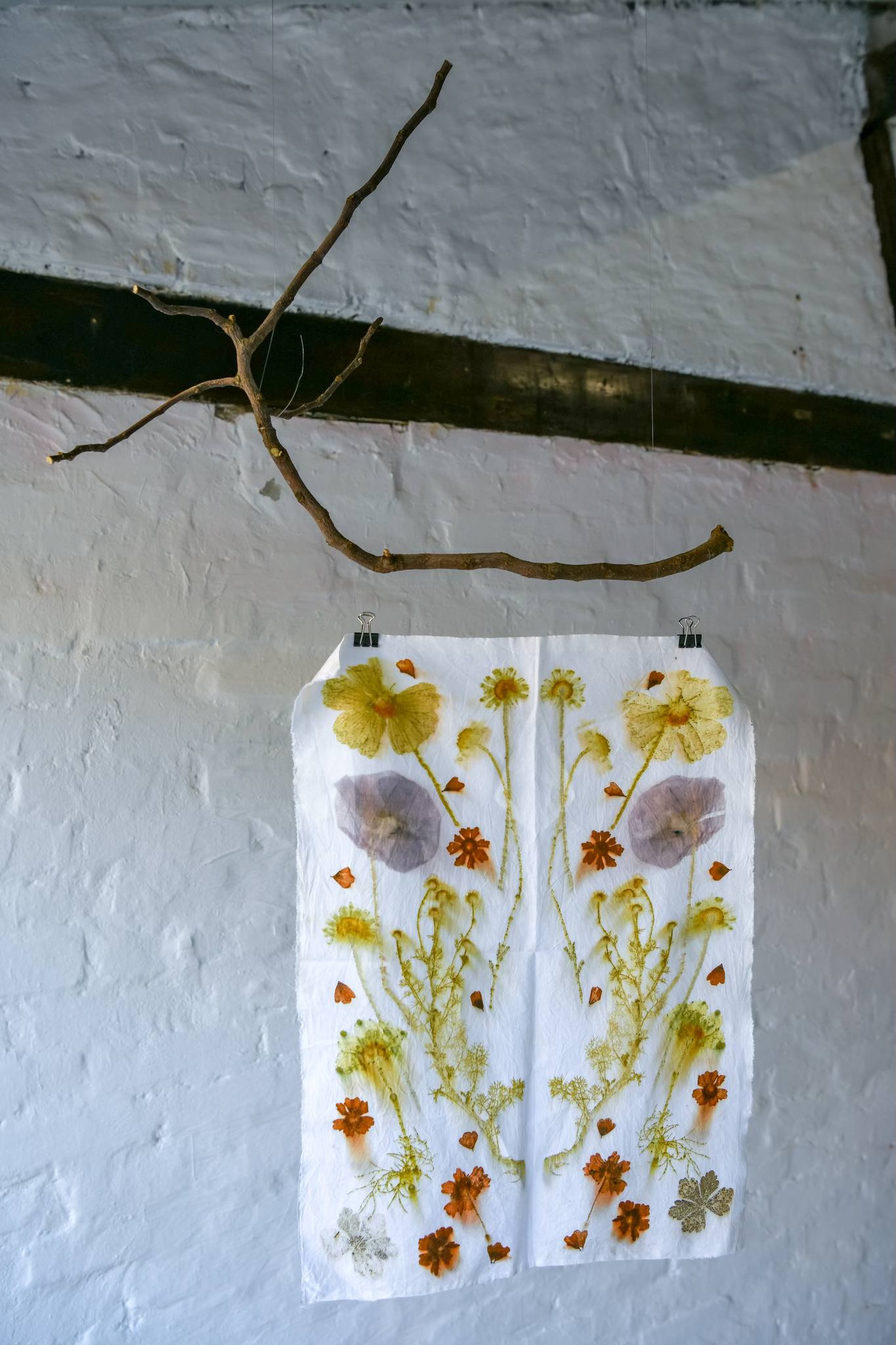
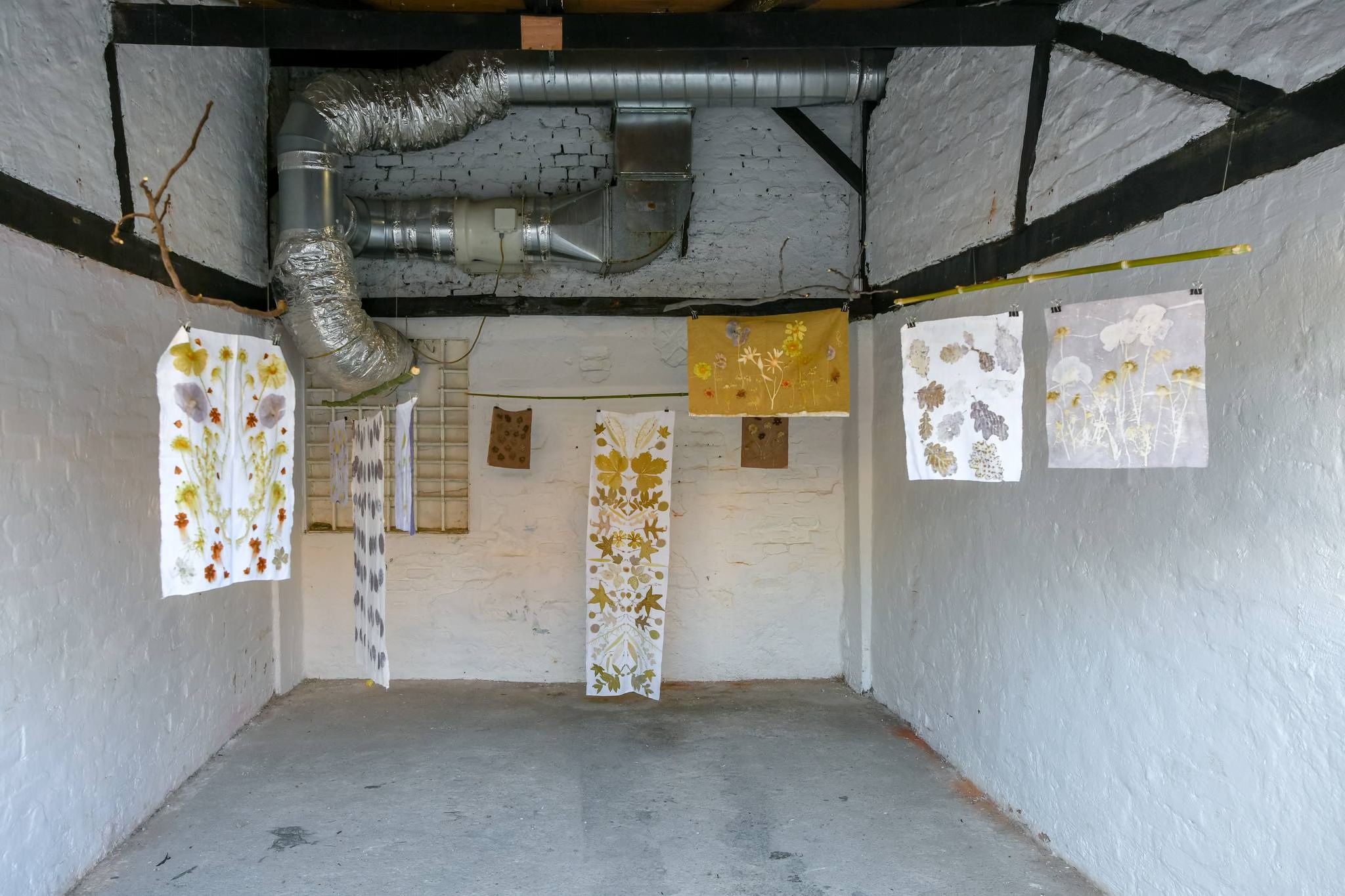
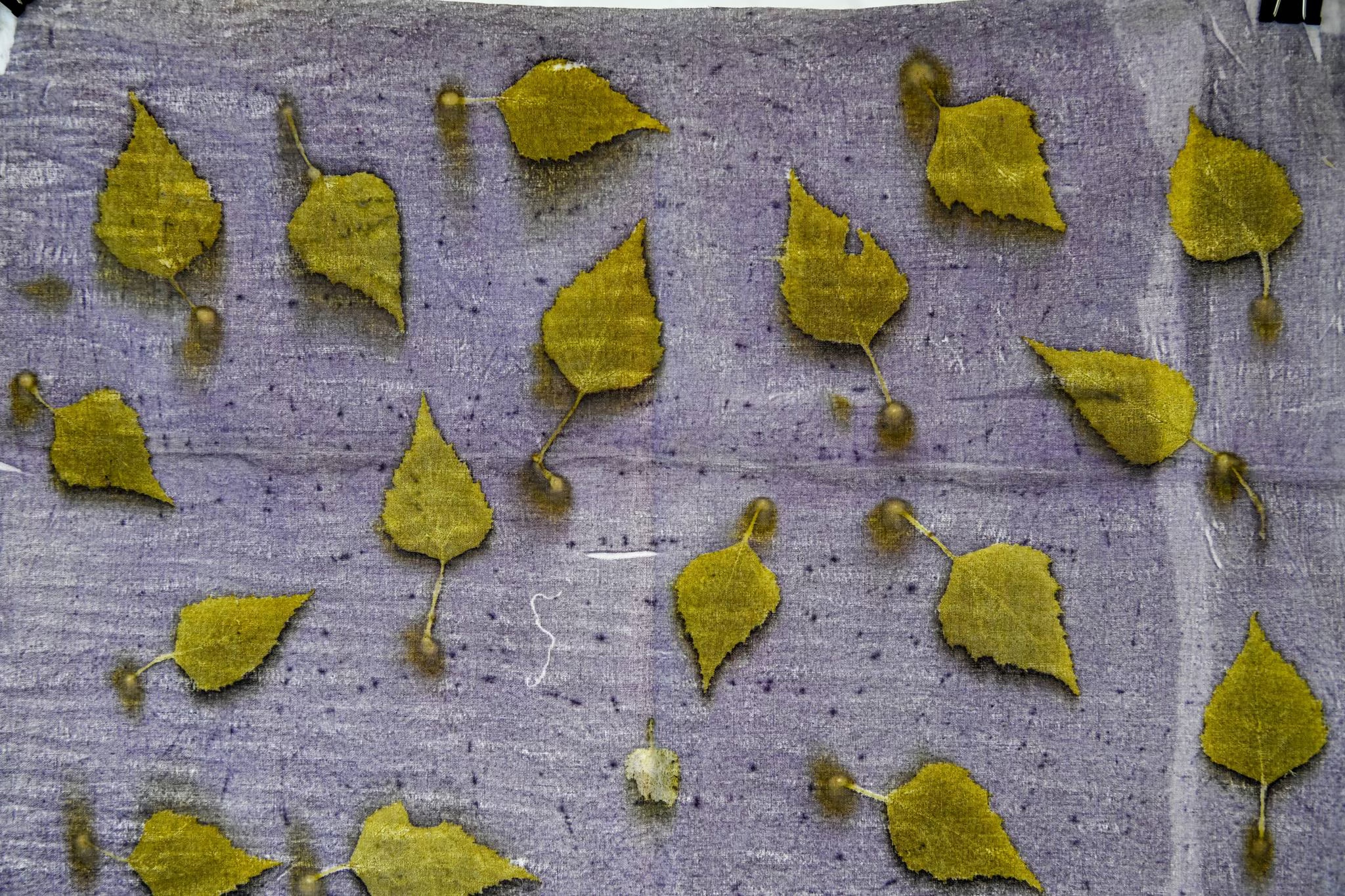
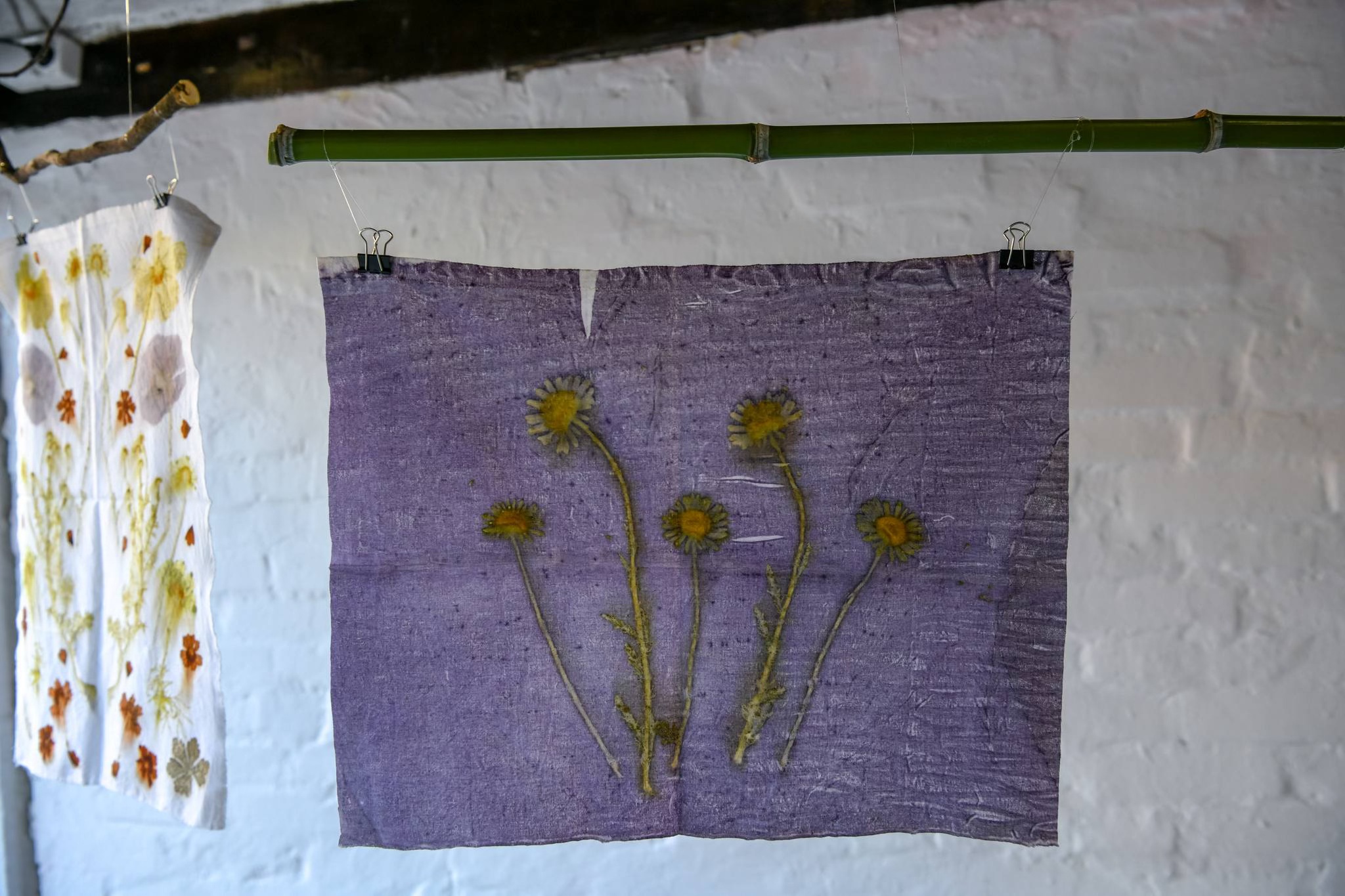
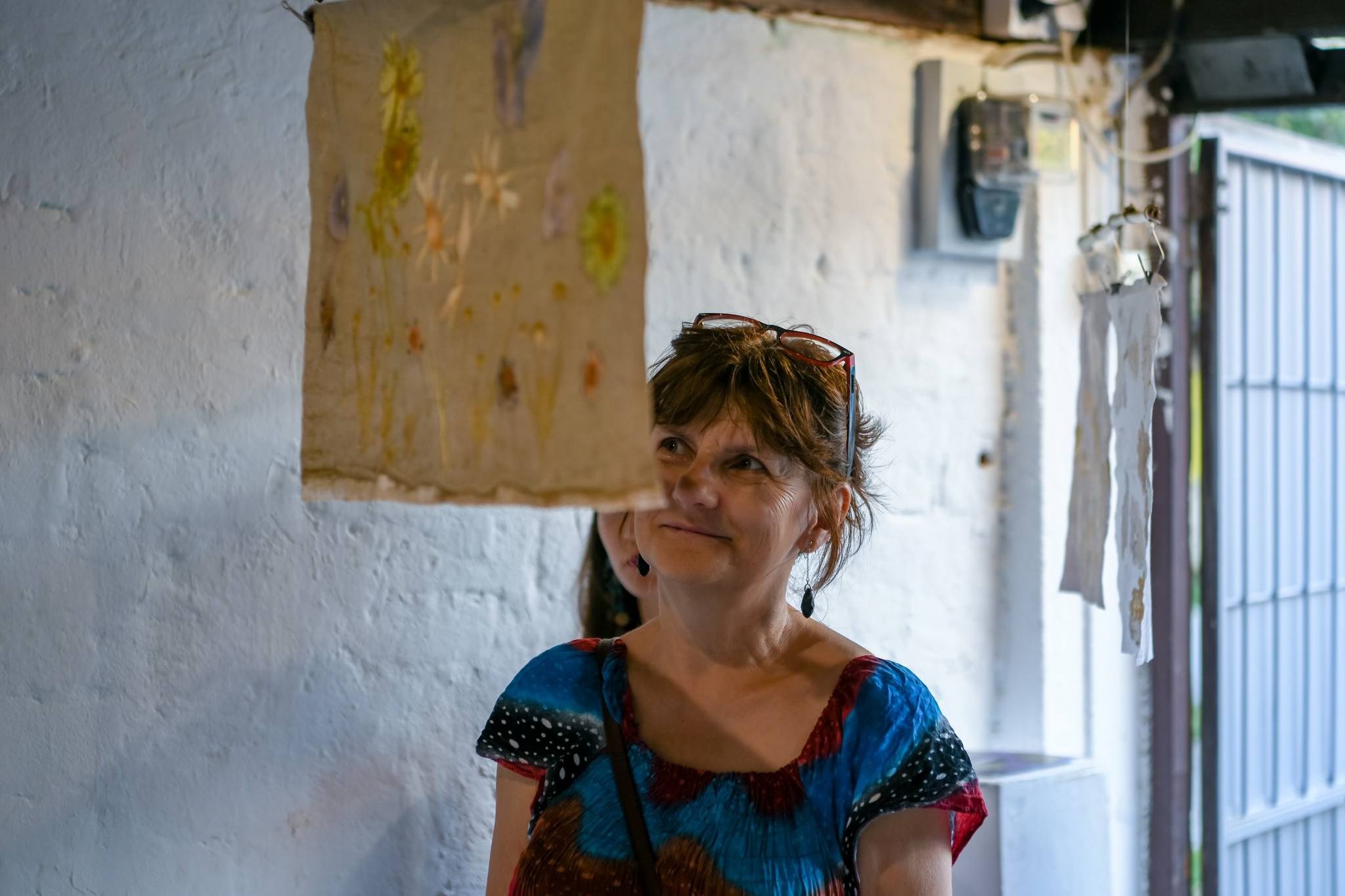
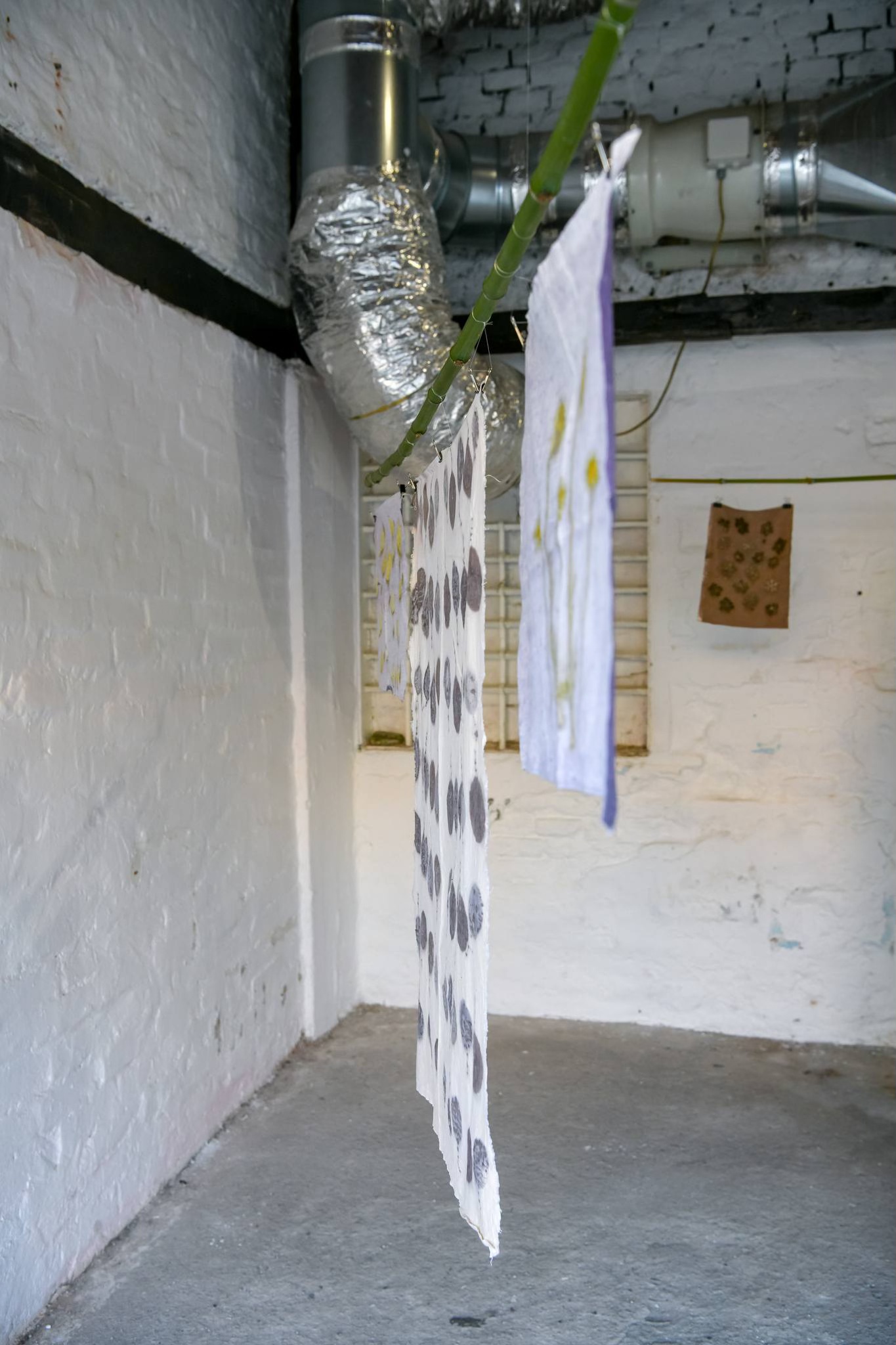
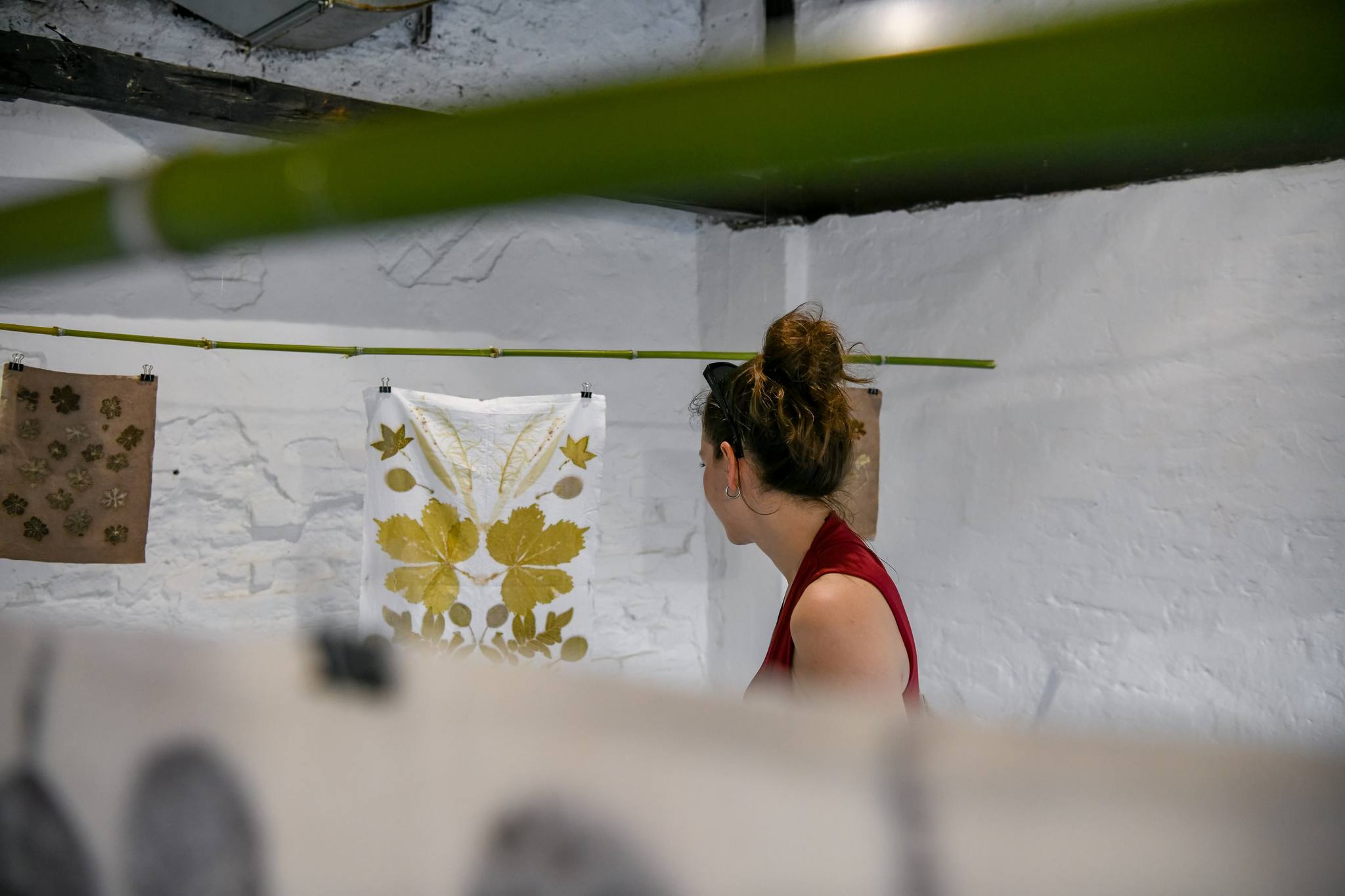
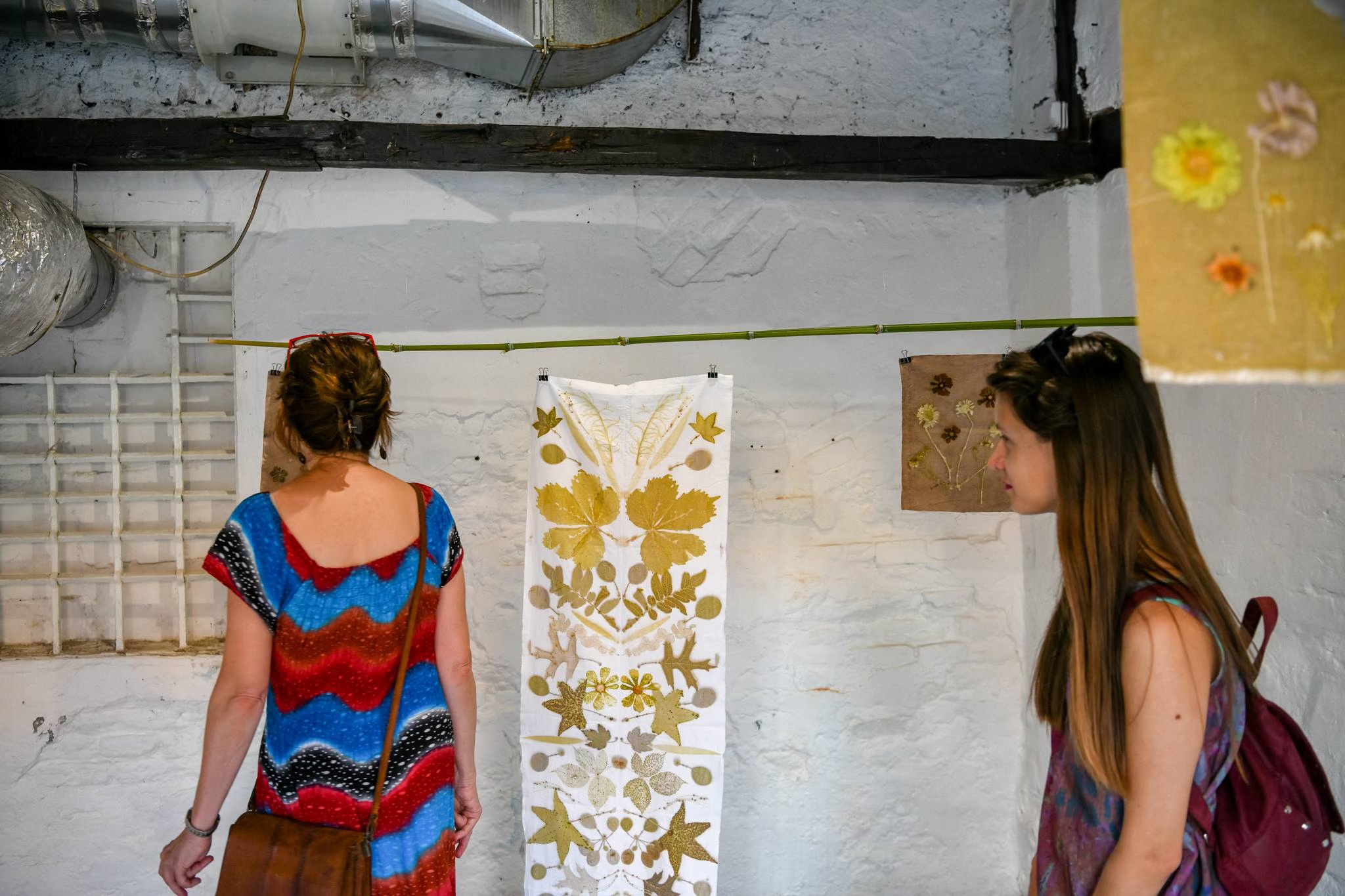
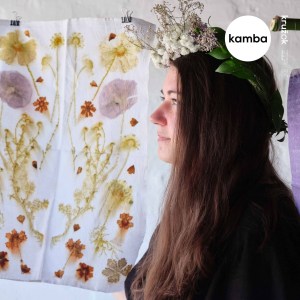
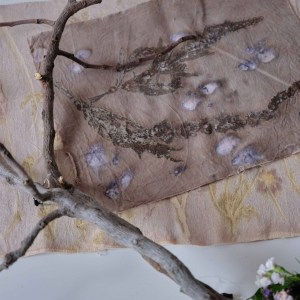
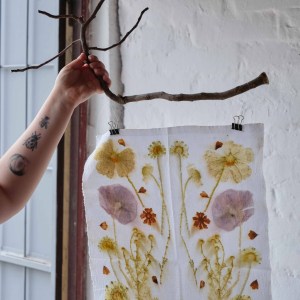
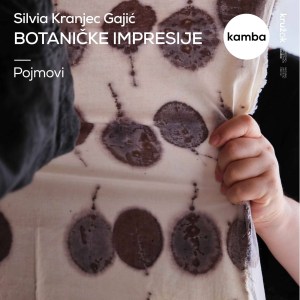
The works from the series Botanical impressions from the author Silvia Kranjec Gajić are examples of works made from one’s own volition and investment of free time into personal development supported by neighbors from the natural environment. Work created by the principle of μεράκι, from one’s desire, have the characteristics of pre-manufactural works: before works were separated (alienated) and put on an assembly line, its author had to be highly artistically and technically skilled. Fabric painted by plants, using the ecoprint technique requires of its author a hand that has been trained over time and that skillfully masters the balance of art and technique. This type of product requires and is explicitly focused on the process which separates it from mass production and makes it long-lasting, more valuable and unique, as can be seen in the extreme precision of the author’s works, some of which give the impression of hyperrealist painting- thus confirming the author’s refinement and dedication to each canvas individually. The principle of μεράκι also opens the gates to experimental methods. This introduces a dose of unpredictability which further enriches the final product; the creation of a perfect composition on fabric by a human hand is possible, with subsequent processing and the action of plants, the inhabitants of nature will create their own unique composition on the canvas, according to their own rules, which evokes a sense of surprise in us (humankind).
In this cycle Silvia Kranjec Gajić takes an active stance which gives priority to nature and invites us to return to it if by chance we drifted away from it.
Gallery







IMPRESSUM
Artist: Silvia Kranjec Gajić
Text: Buga Kranželić
Photography: Juraj Vuglač
Support: “Kultura nova” Foundation, Ministry of Culture and Media of the Republic of Croatia, City of Zagreb
Sponsor: Medvedgrad Brewery
Realization of the exhibition is financially supported by the Ministry of Culture and Media of Republic of Croatia.
Biography
Silvia Kranjec Gajić (1989.) is a textile and fashion designer who received her master’s degree in 2017 at the Faculty of Textile Technology. In her work, she focuses on sustainable practice, she researches the possibilities of natural dyes and eco-prints, designing collections and photography. She exhibited at one solo exhibition (Galerija Crta, 2018) and many group domestic and foreign shows. She is the author of many workshops for children and adults on the topic of eco-printing and sustainability.
Glossary





 Garaža Kamba