
GOBL1N_F3RM3N74T10NS
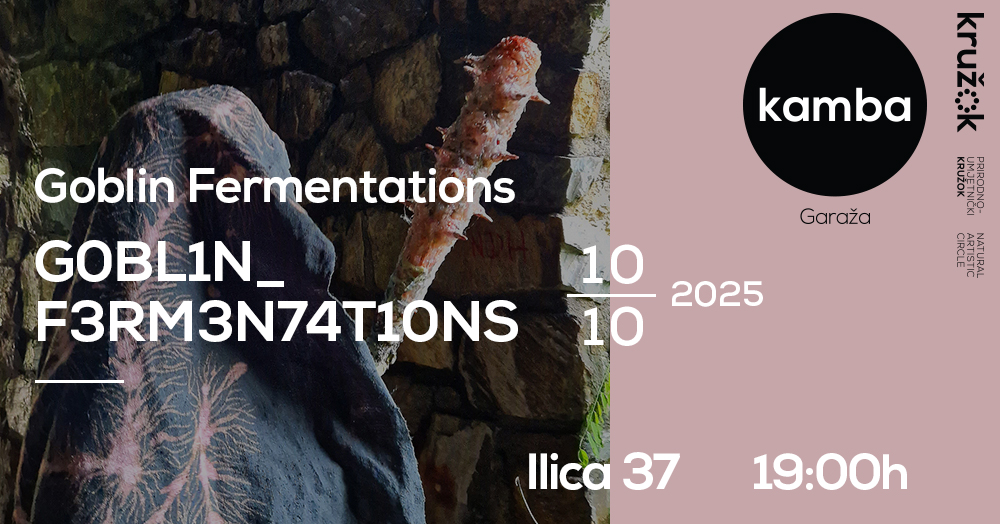
Why is it that we refer to the Middle Ages as the Dark Ages, whereas we, for example, liken the modern age with the emergence of the industrial revolution to the golden age of humanity. We can get our answers from subjective and biased human sources, but we can also find them as we wander through our surroundings; many centuries ago, human suffering consisted of natural disasters, beasts and diseases, but oftentimes it was caused by man himself through war and destruction. Clearly, we like to look at the quality of certain periods and eras from our human point of view and therefore humans perceive their own suffering as negative, but despite that nature lived on and thrived. By taming nature and curbing our fears, we turned our world into a place where nature has little space left and by creating non-biodegradable processed products made from inorganic matter which harms the organic world, we went down a road of no return.
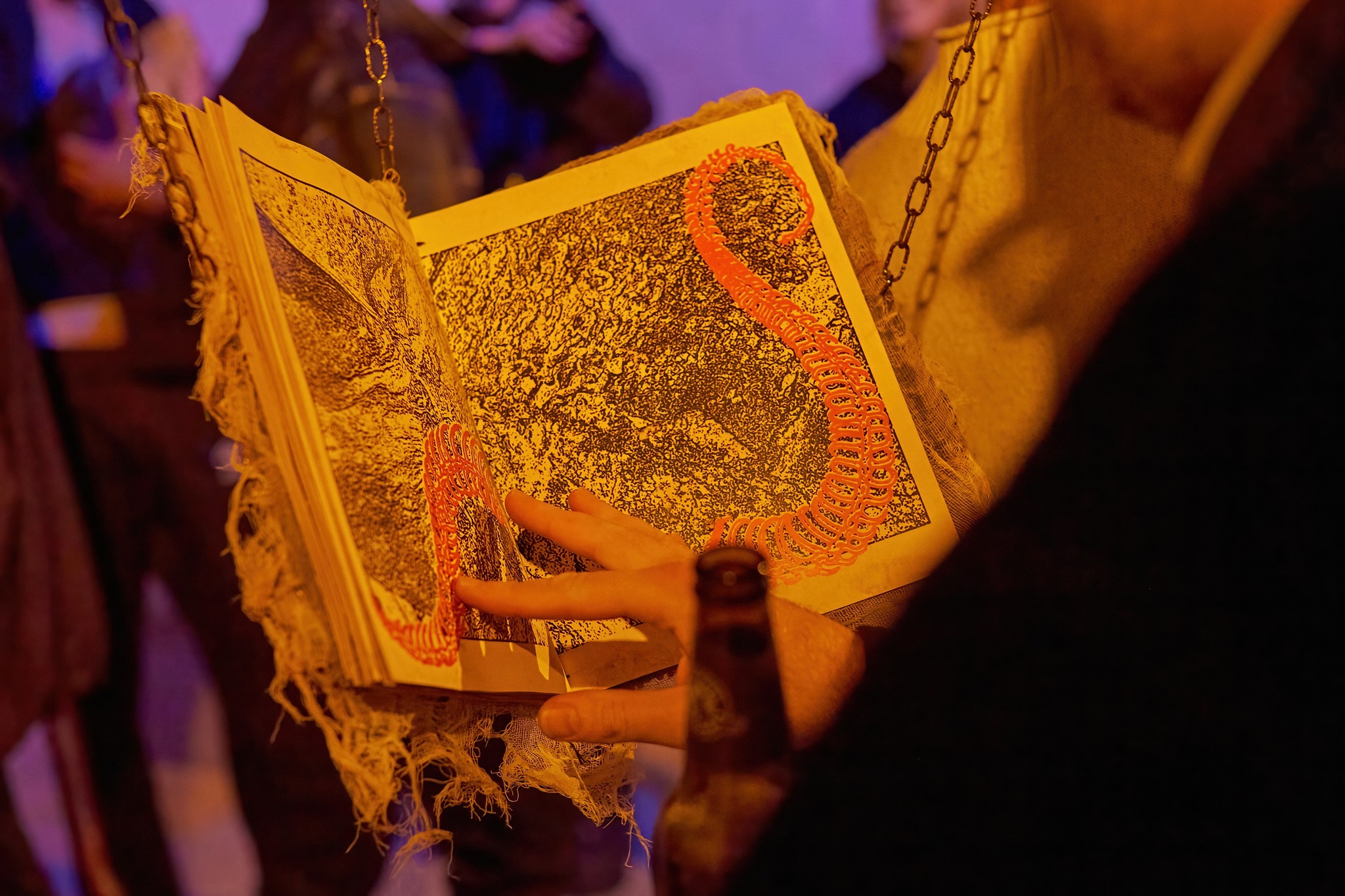
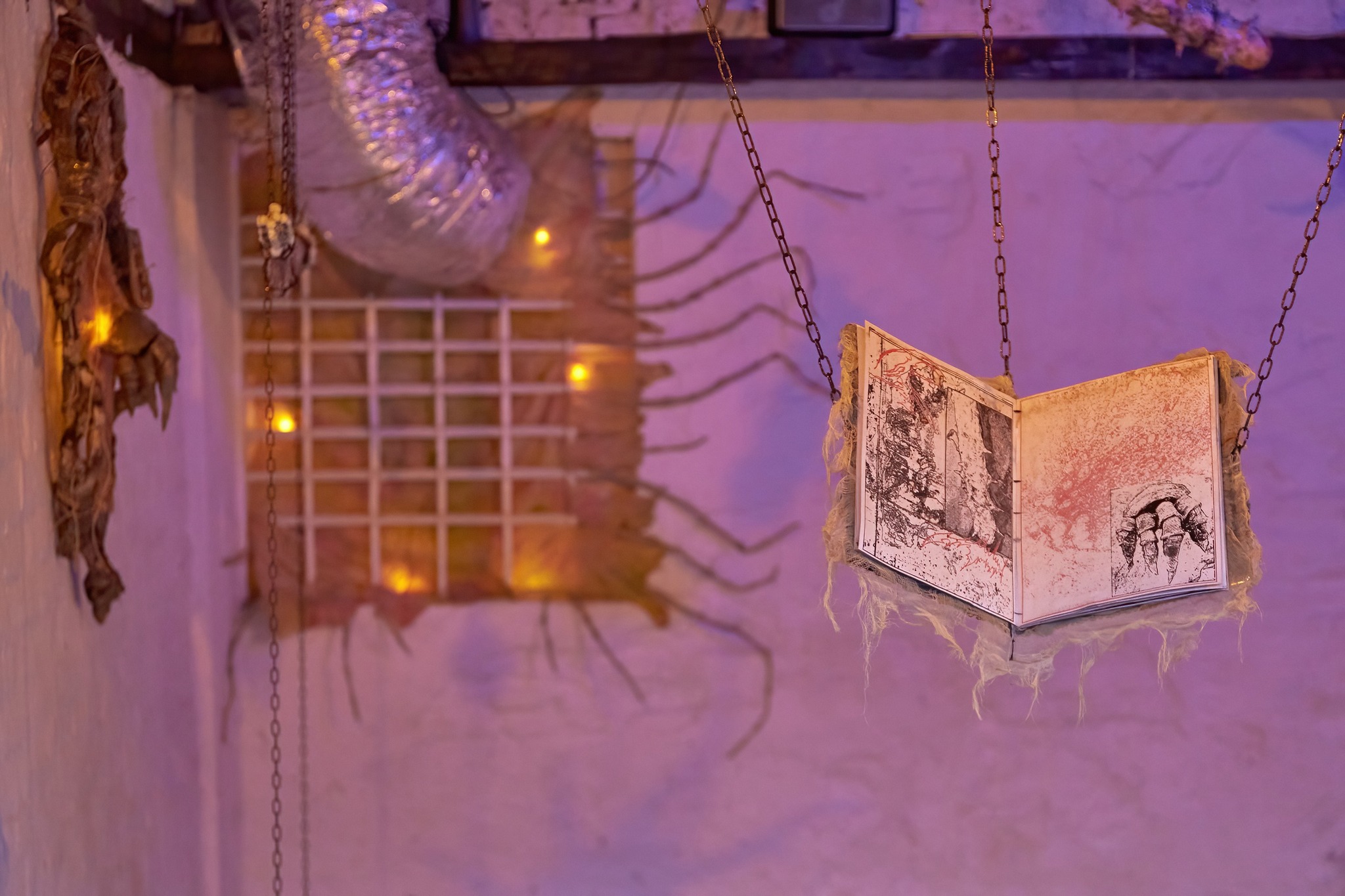
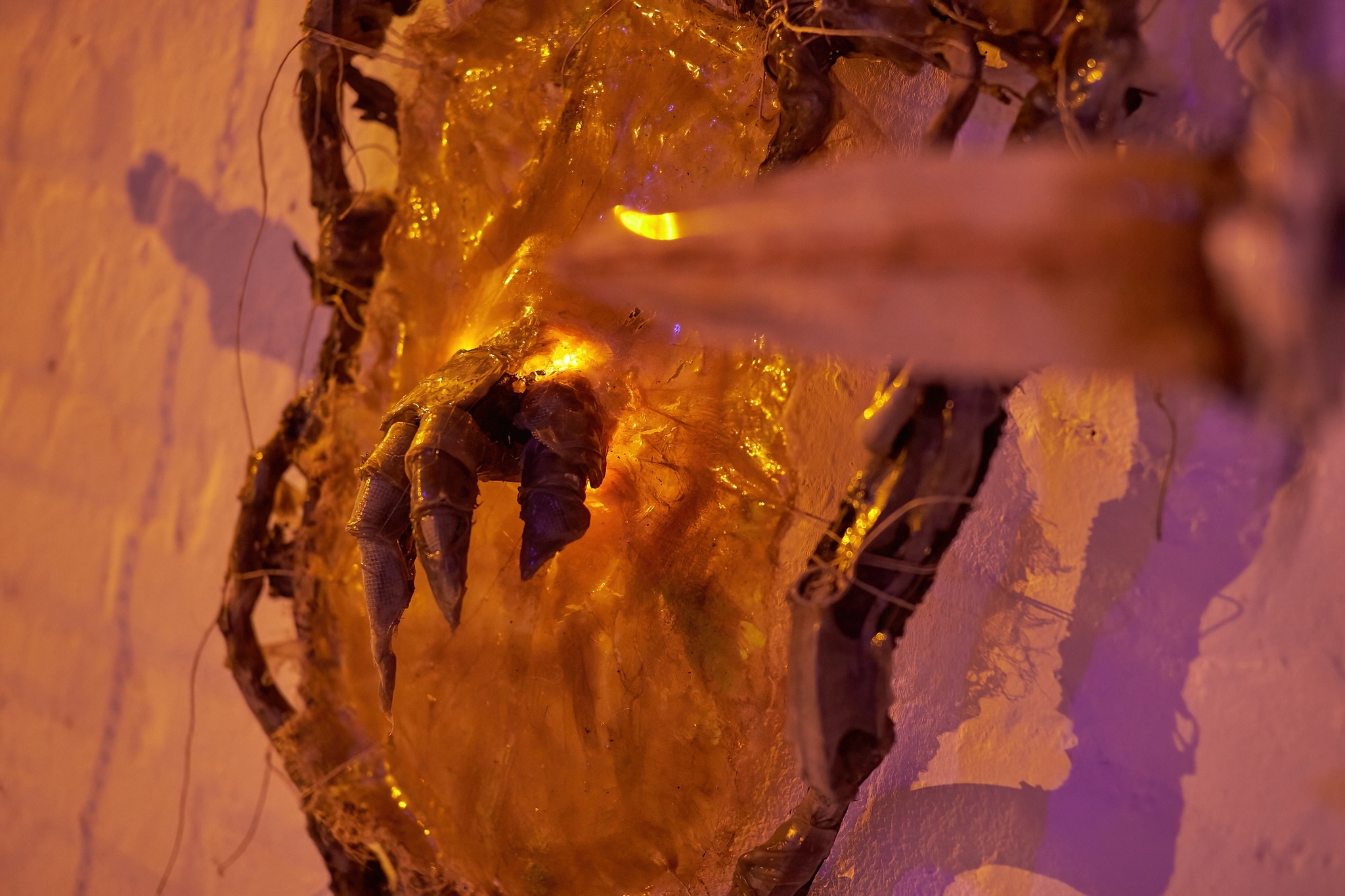
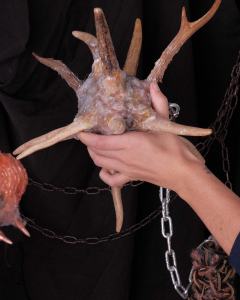
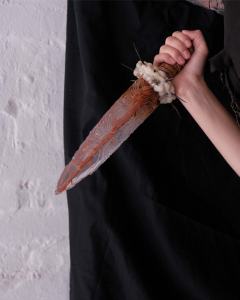
Are these inorganic objects, although they too are a part of our world, truly negative and fatal for our environment – is it even possible for them to coexist? One of the possible results can be found in the post-apocalyptic dimension through which roam mysterious and fantastic creatures – Goblins. The maker of one of those possible worlds is the art collective Goblin Fermentations, a duo that consists of Vina Ćurčija and Mihael Čuček, and its formation was inspired by their mutual fascination with dystopian questions and the cartilage gun from Cronenberg’s movie eXistenZ. The artefacts discovered by the new humanoid species of Goblins stem from the human civilization well-known to us, but long gone in this world. These artifacts follow the norms of the aforementioned movie in which inorganic objects made of silicone, so-called Bio-ports that at first glance look like real organic creatures made of flesh and blood, interconnect with humans, themselves living and organic beings. Thus, from an unexpected bond of opposites, an artificial symbiosis is born. New rules are added to the long-established ones of mother nature in a way that we discover not only organic materials such as bones and leather originating from animals, wood and different saps, but also inorganic materials like resin, plastic, synthetic polymers and similar. Those objects are created through various techniques of the chemical, hand-made and mechanical type – heat treating, soldering, sewing and embroidery, woodworking and modelling – by which they imitate the process of human and natural devastation. Grotesque-looking weapons – a club and a mace – that are used by those new inhabitants of our planet take on different forms from history long ago not unfamiliar to man and are born by merging organic and inorganic resources of this new nature. The Goblins’ civilization which is steadily evolving in an environment similar to the dark Middle Ages, although seemingly primitive to the observing eye, advances swiftly by successfully surviving and building dwellings.
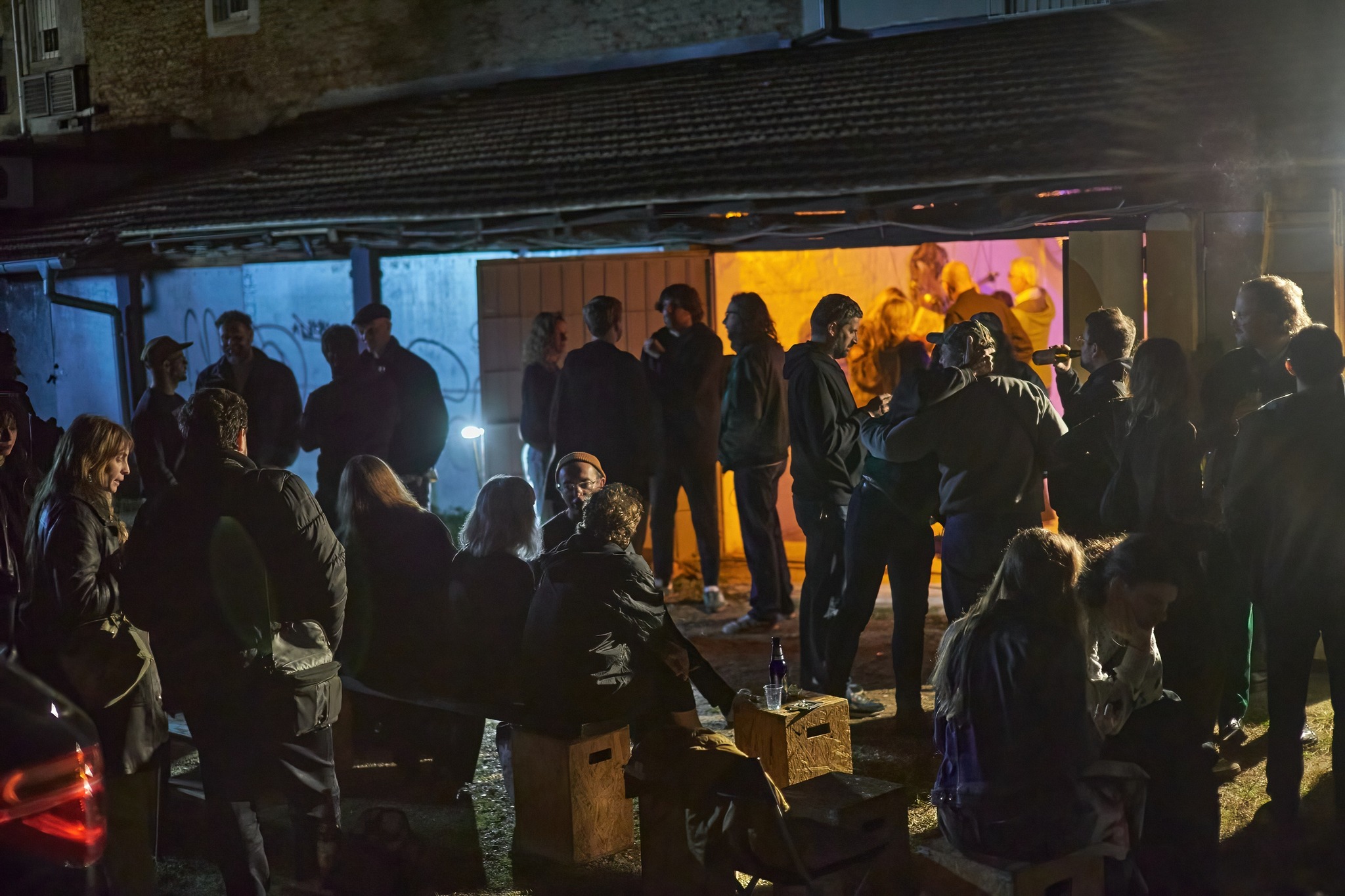
By stepping into the gallery space, we are given an opportunity to travel through time and dimensions where we bear witness to the consequences of our actions or rather lack thereof. We choose whether our glimpse of humanoid structures within the domain of this new kind will alienate us or bestow upon us new knowledge.
Gallery


IMPRESSUM
Artists: Goblin Fermentations
Audio installation: Ivor Krešić
Text: Franka Puharić
Photography: Šimun Bućan
Support: “Kultura nova” Foundation, Ministry of Culture and Media of the Republic of Croatia, City of Zagreb
Sponsored by: Medvedgrad Brewery
Biography
Goblin Fermentations was formed in early 2023 between Berlin and Zagreb and consists of Vina Ćurčija and Mihael Čuček. The collective has only one purpose; the construction of an imaginary world named G0BL1N_F3RM3N74T10NS. The project is in a constant process of evolution and expansion, through a hybrid posthumanist metaverse inspired by primitive forms, medieval motifs, eco-horror, and folklore.
Glossary






 Garaža Kamba