
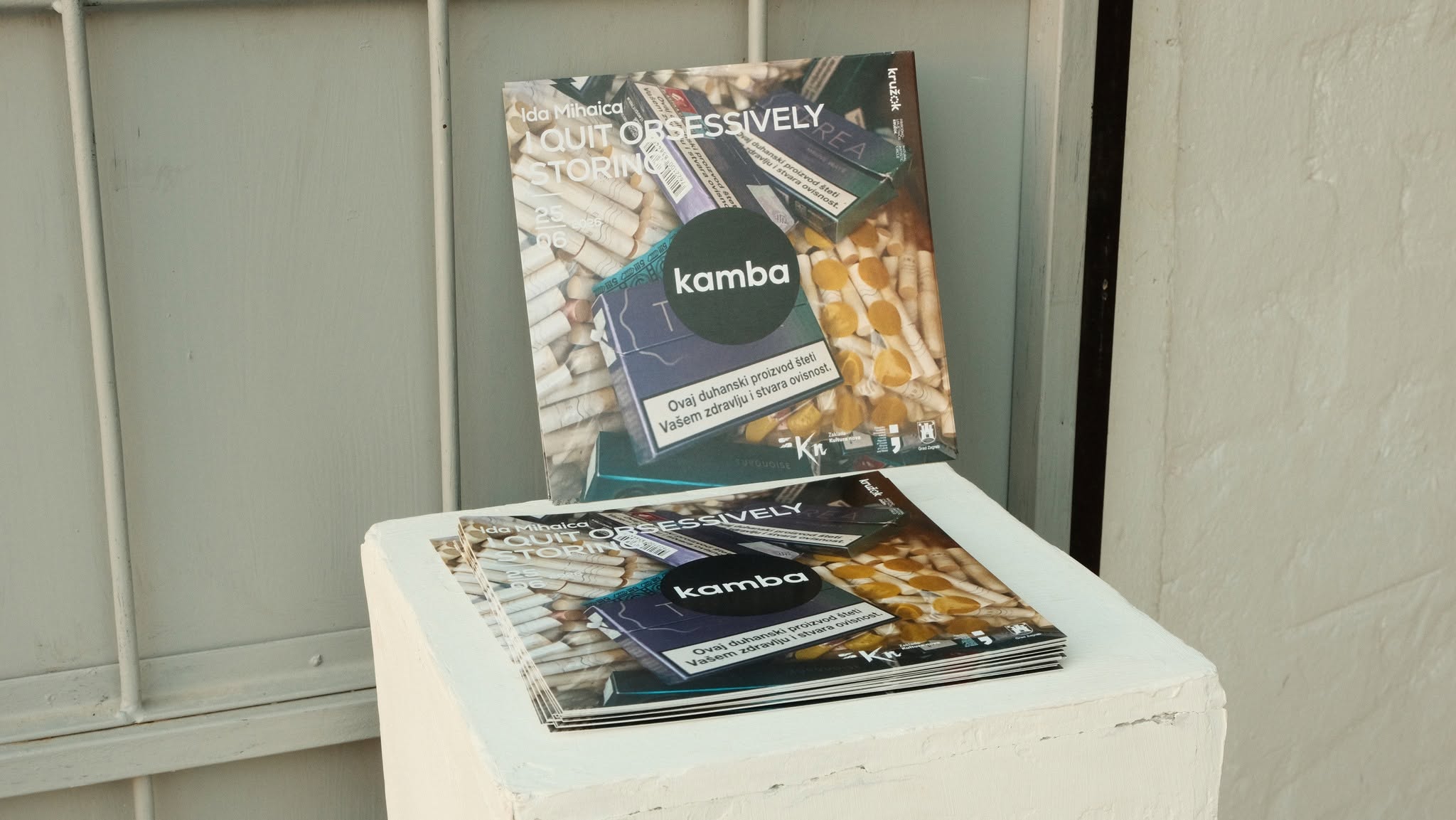
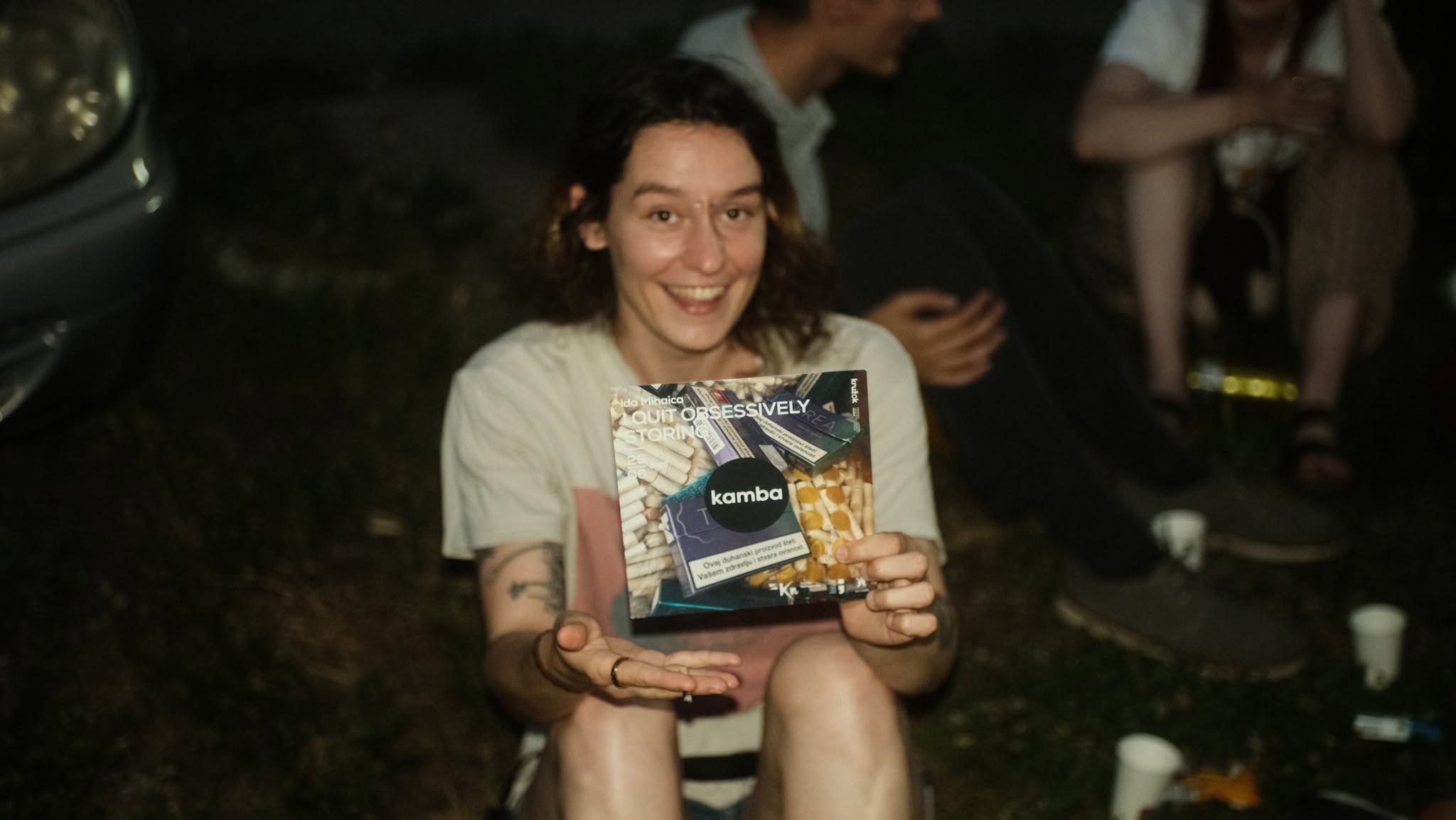
I QUIT OBSESSIVELY STORING
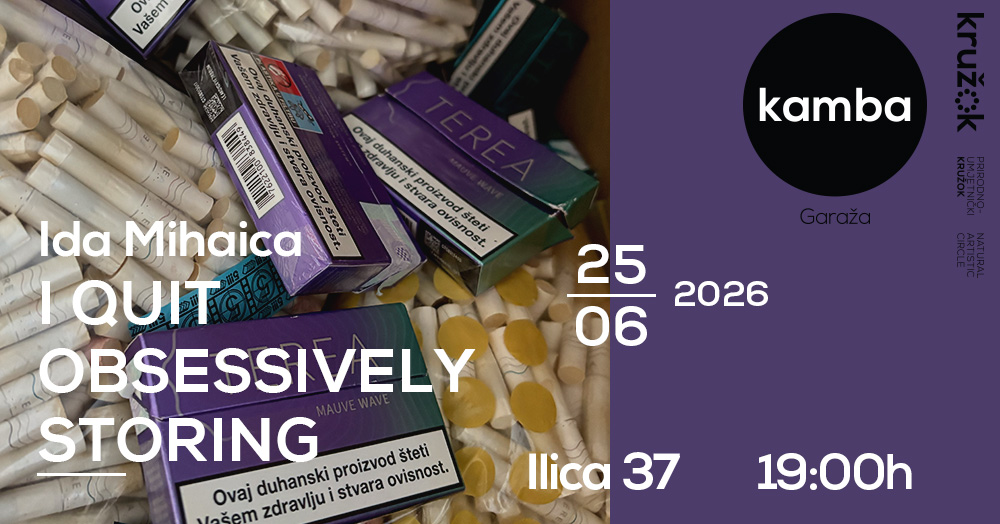
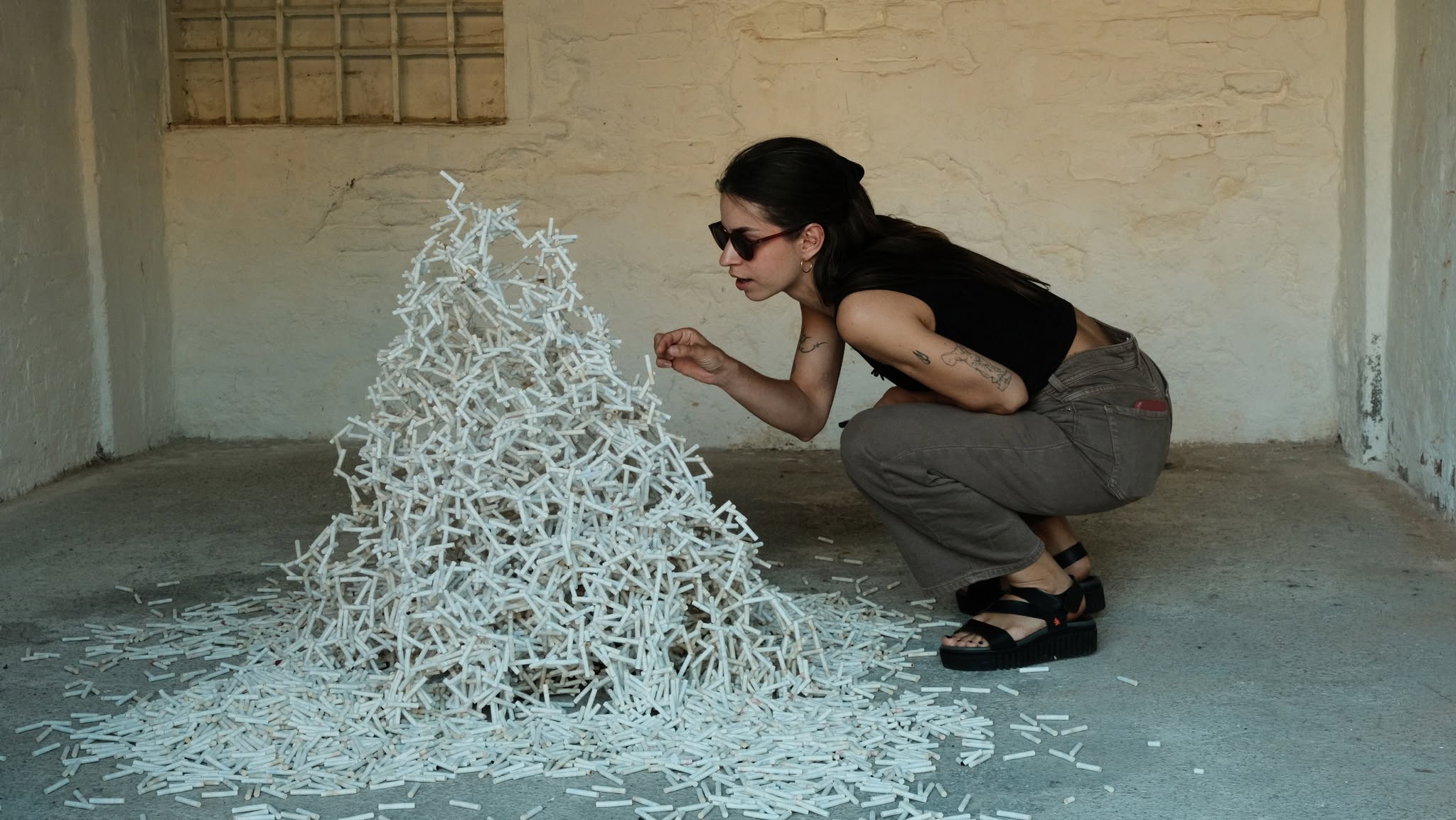
People collect things. Everything: postcards, stamps, books, and a mountain of other useful and less-than-useful objects. These items usually possess some form of value, even if we are the only ones who understand it and are inclined to imbue them with meaning. Enter Ida Mihaica, who blazes an unconventional trail, antiquarian-style, by collecting the butts of IQOS cigarette inserts—completely useless items devoid of any sentimental value. It is precisely through this uselessness and absurdity that she holds up a mirror, exposing a fascinating consumer culture. Not knowing what to do with them later, she first began piling them up on her table. One pack appeared, then a second, then a third, and as she says herself: “I started collecting my own. Then I started collecting other people’s. Then people started collecting them for me. Only when hundreds had accumulated did I realize just how many there actually were.”
It is worth noting how all of this came about. Ida admits she was a bit arrogant at first, looking down on those who smoked something with a rather peculiar, flatulent odor—yet here she is now, creating an installation out of thousands of IQOS1 inserts. She, too, fell for the narrative of odorless, ashless cigarettes that users neatly tuck back into the pack after indulging in their minor, toxic ritual. Users systematically put them back in the box, forgetting that inside lie plastic, metal, and electronic components that make their disposal far more complex than that of “analog” cigarettes. She didn’t throw away the first used pack, nor the second, and here we are—fully updated to the present day.
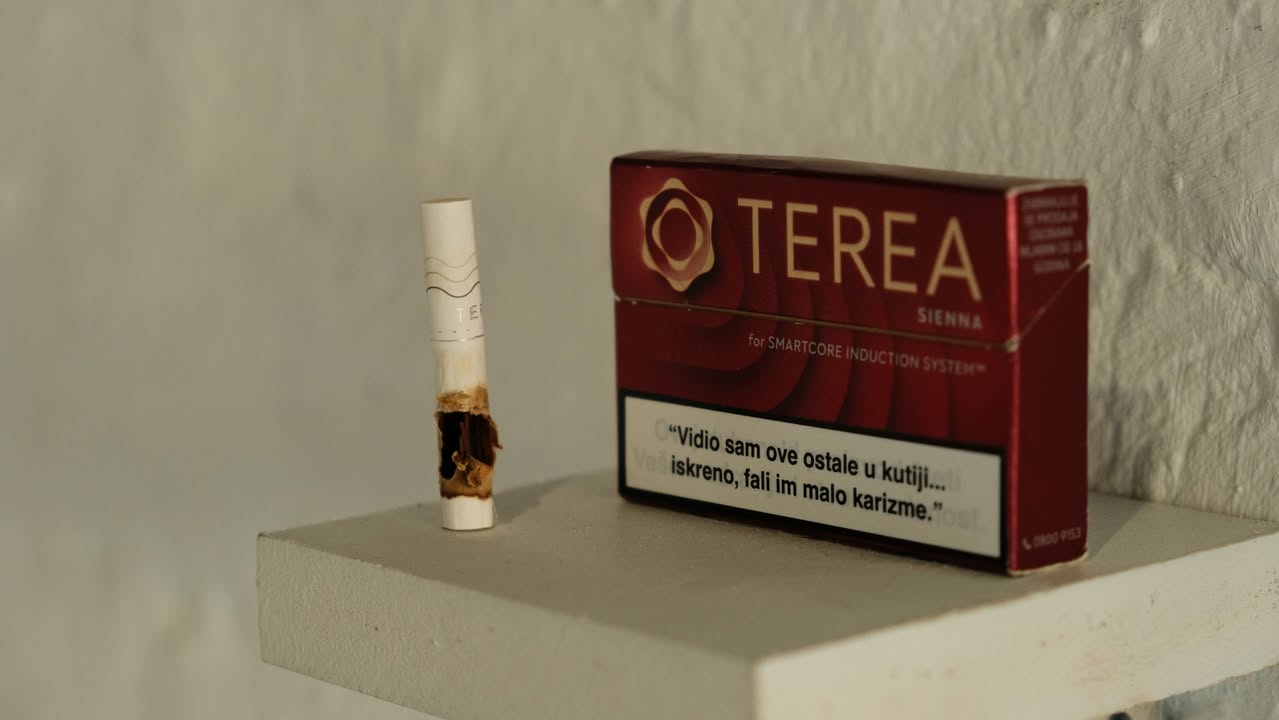
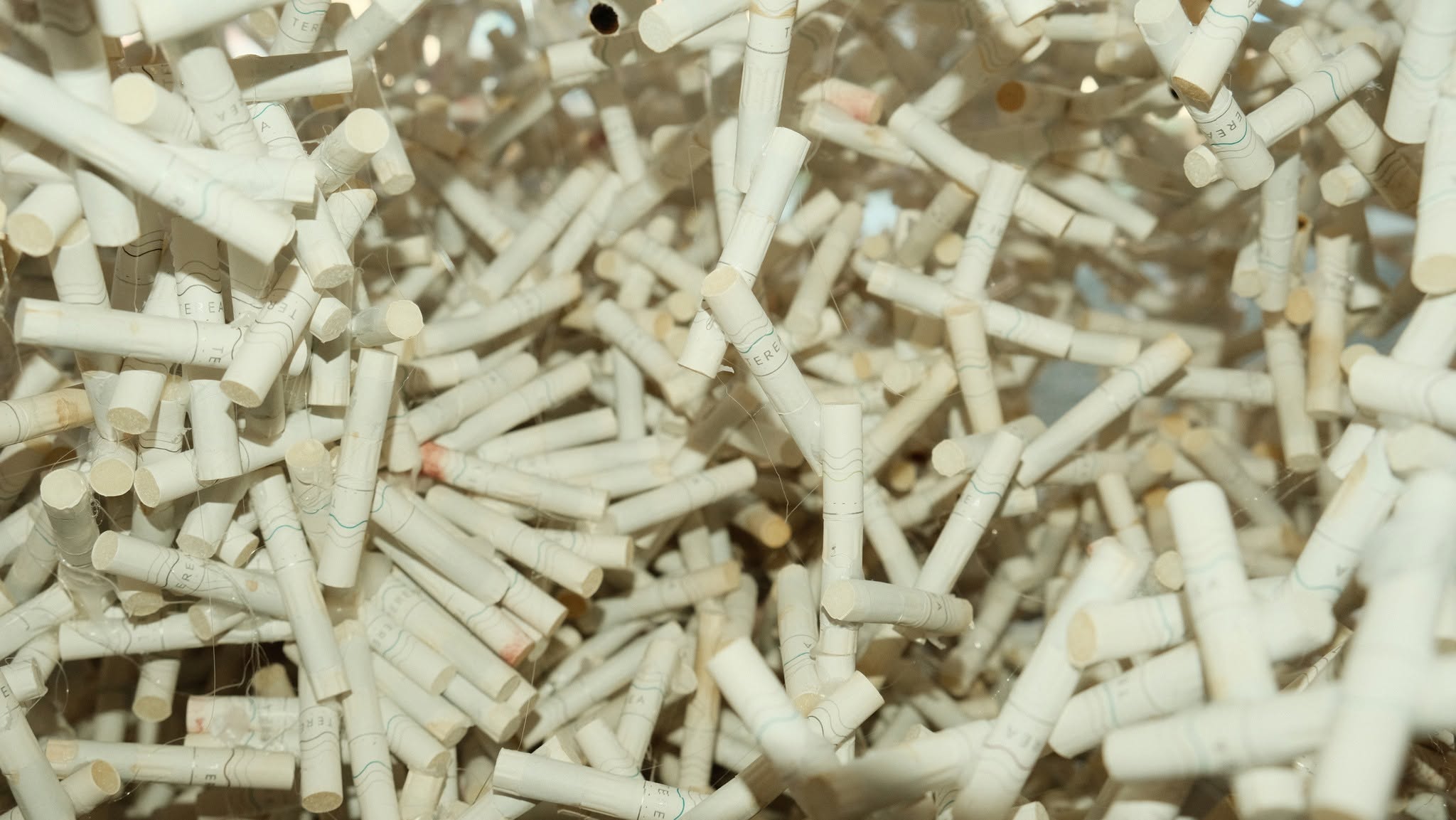
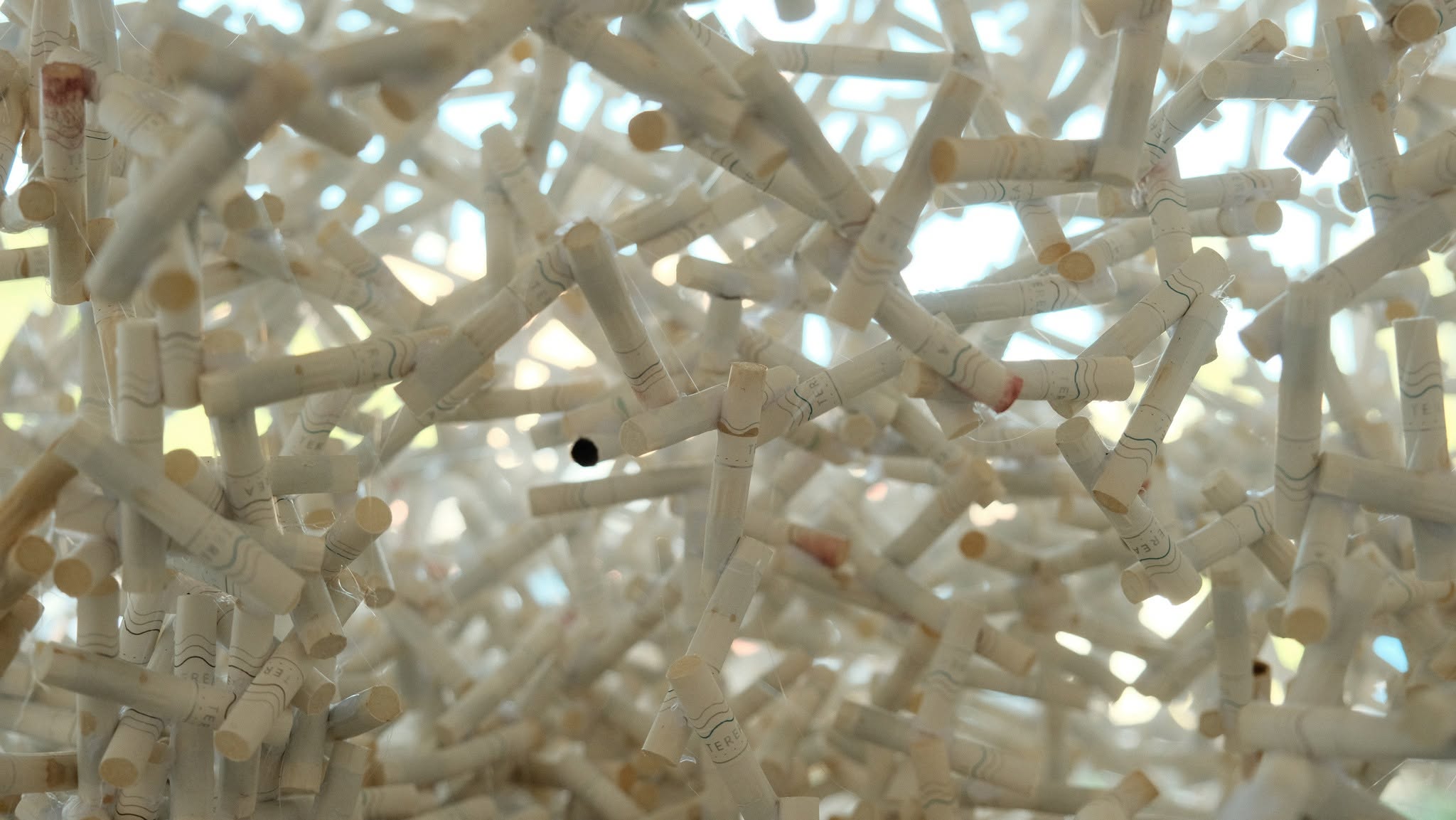
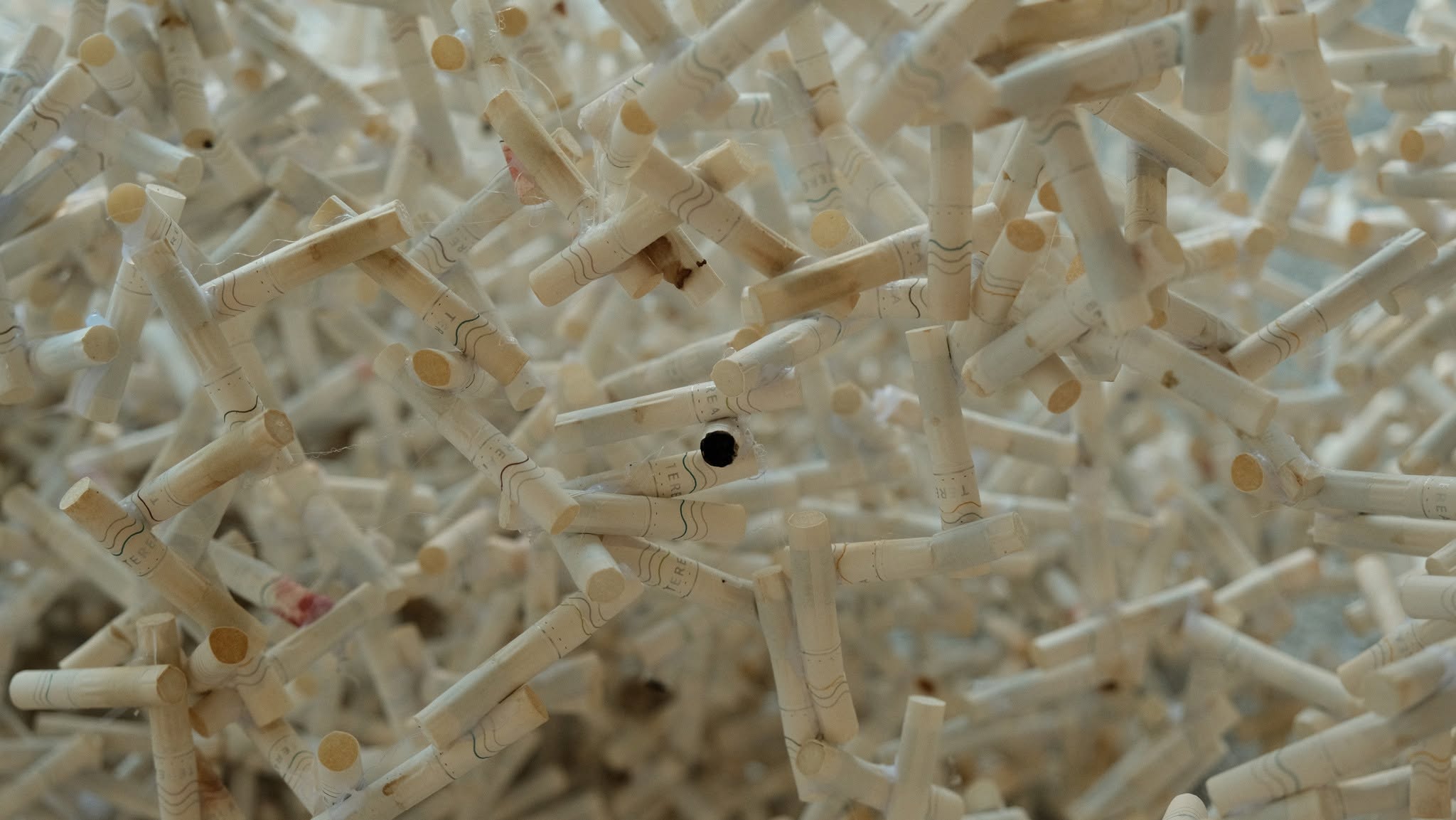
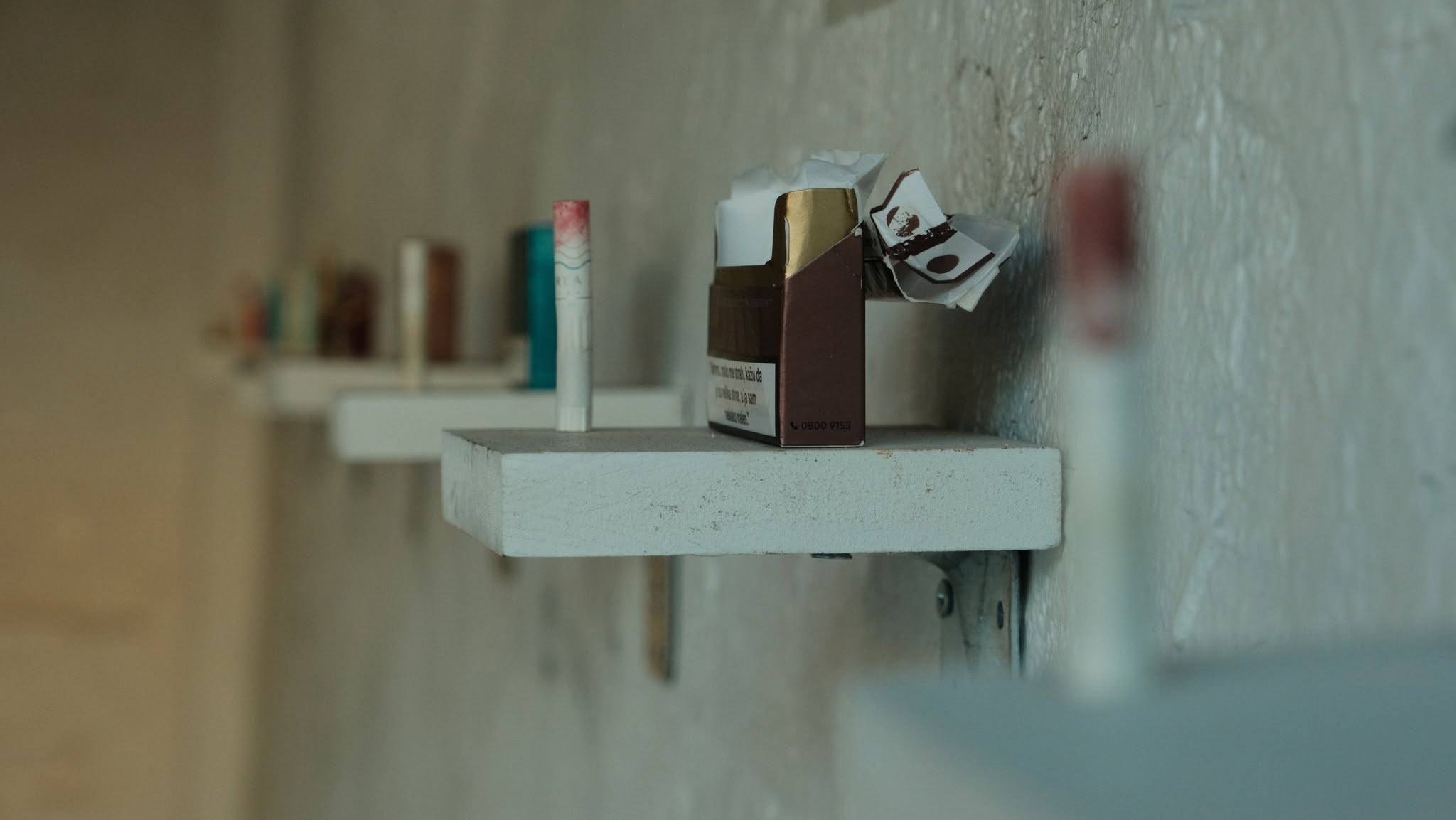
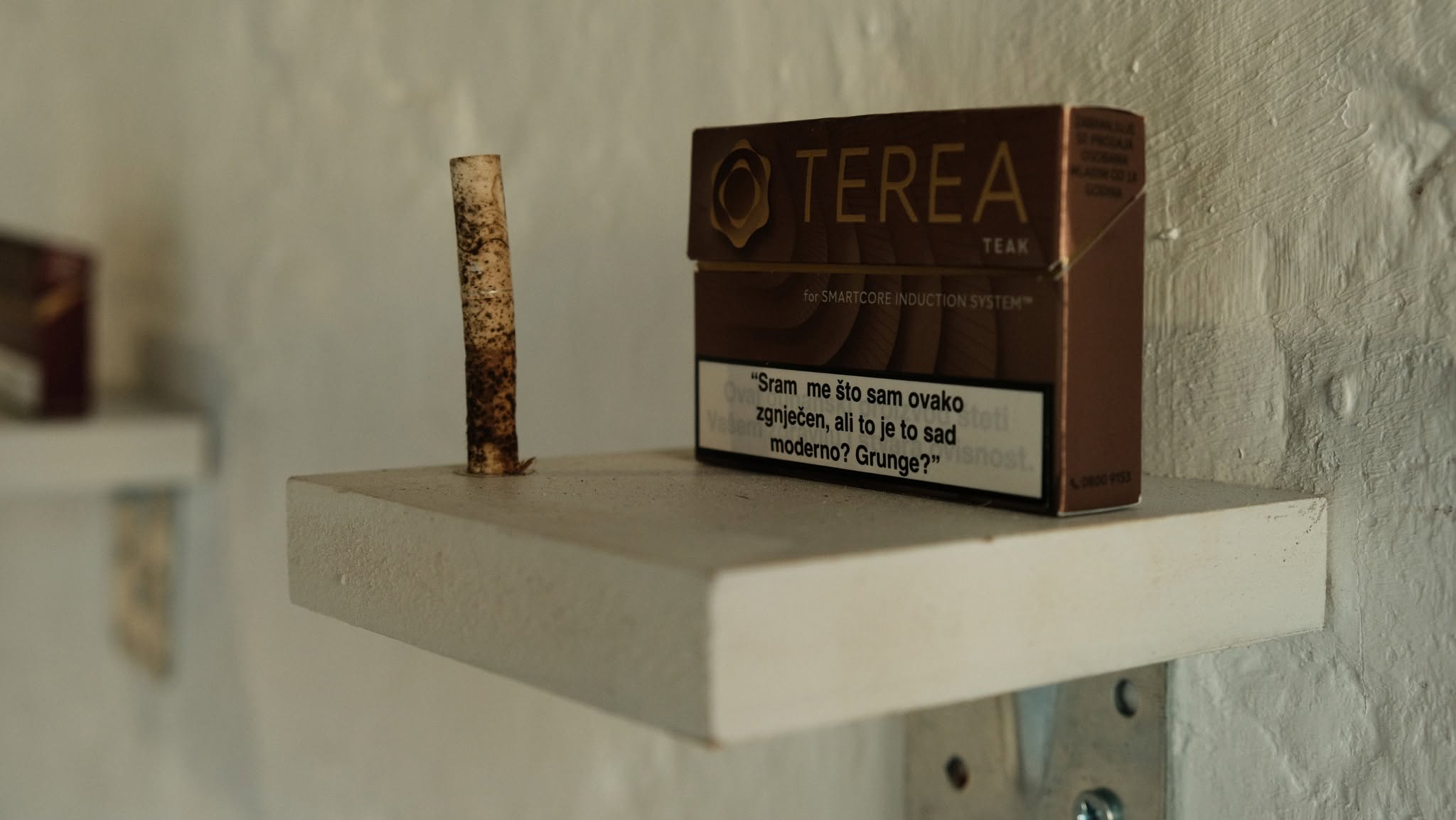
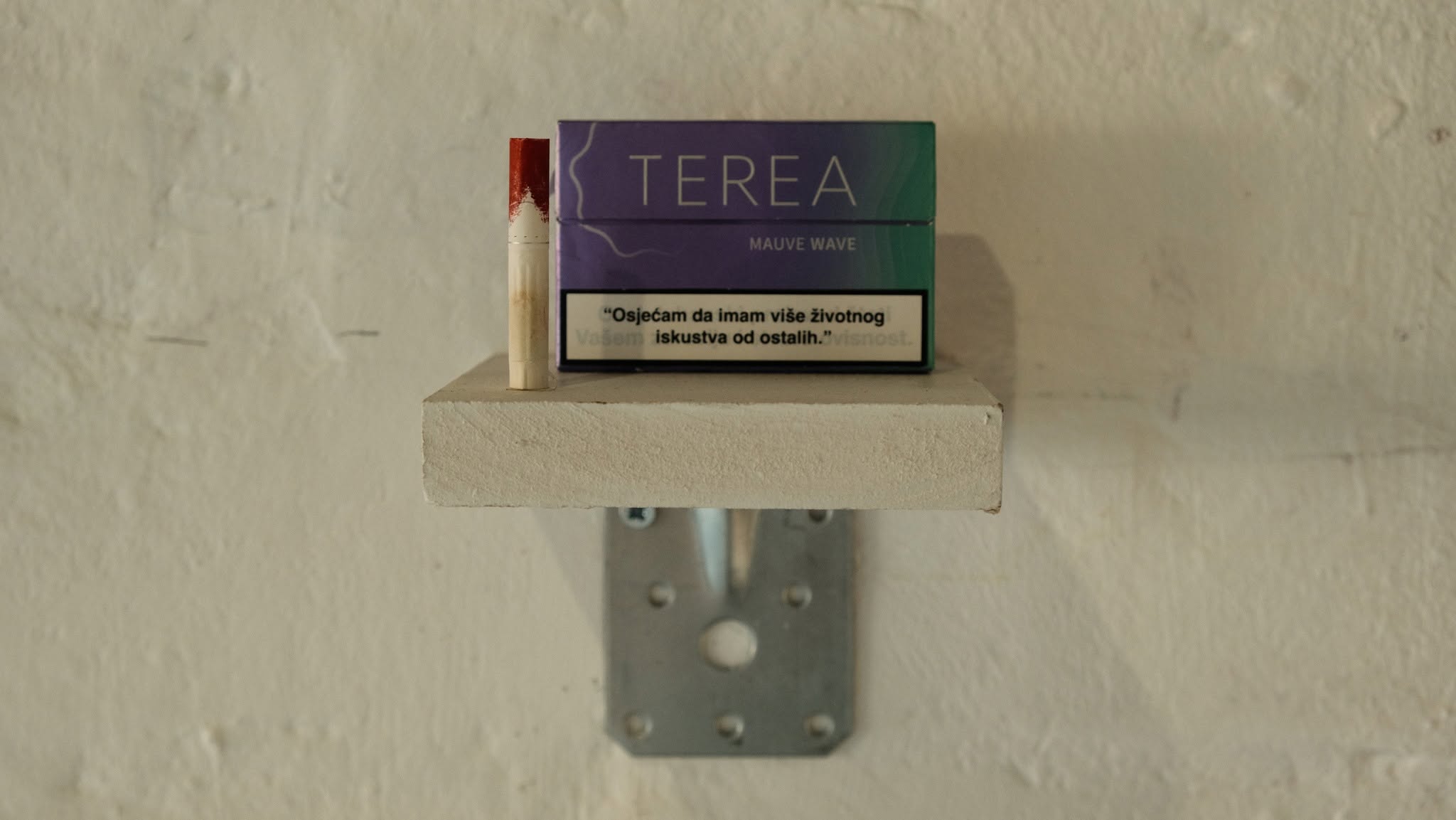
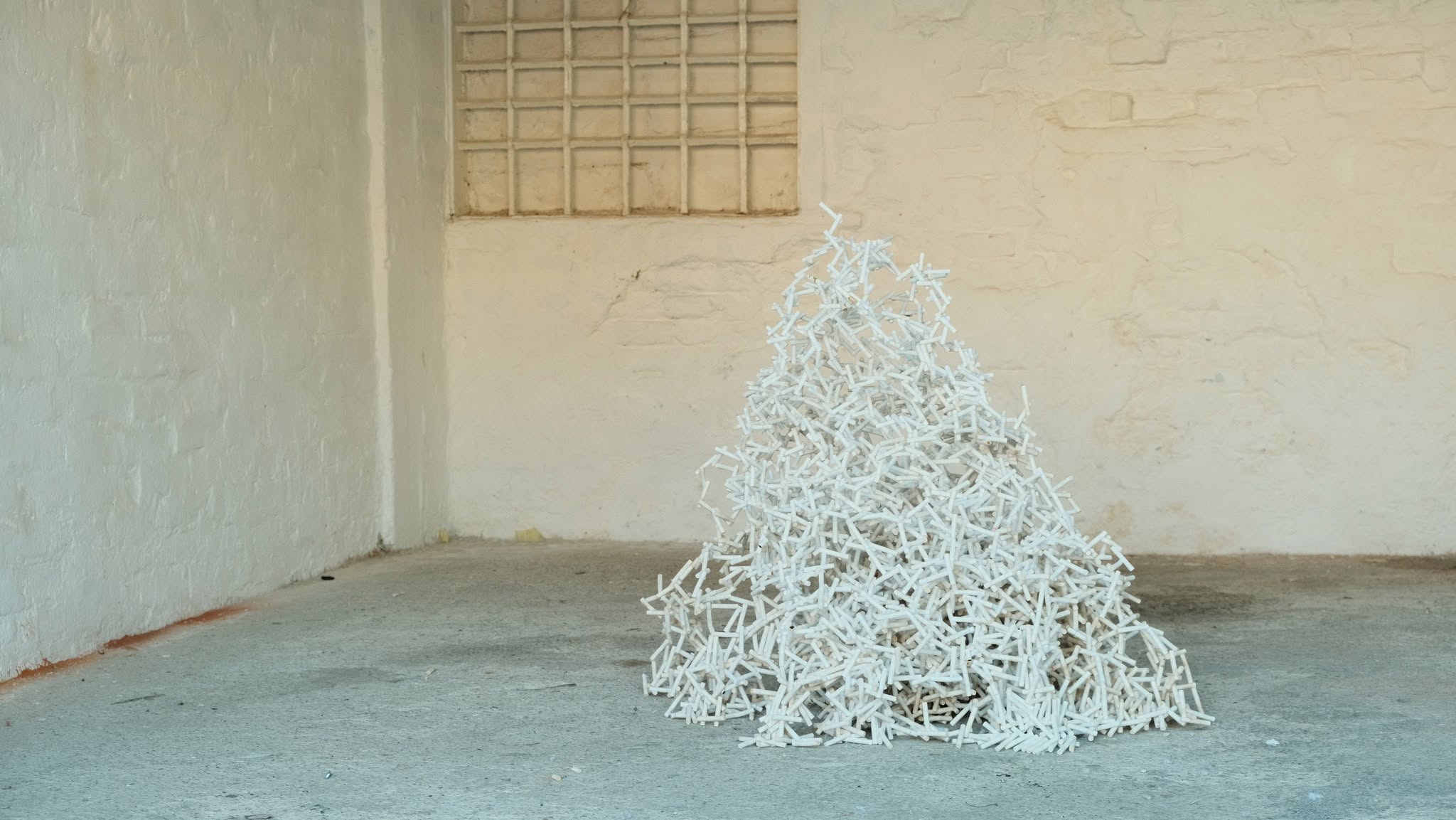
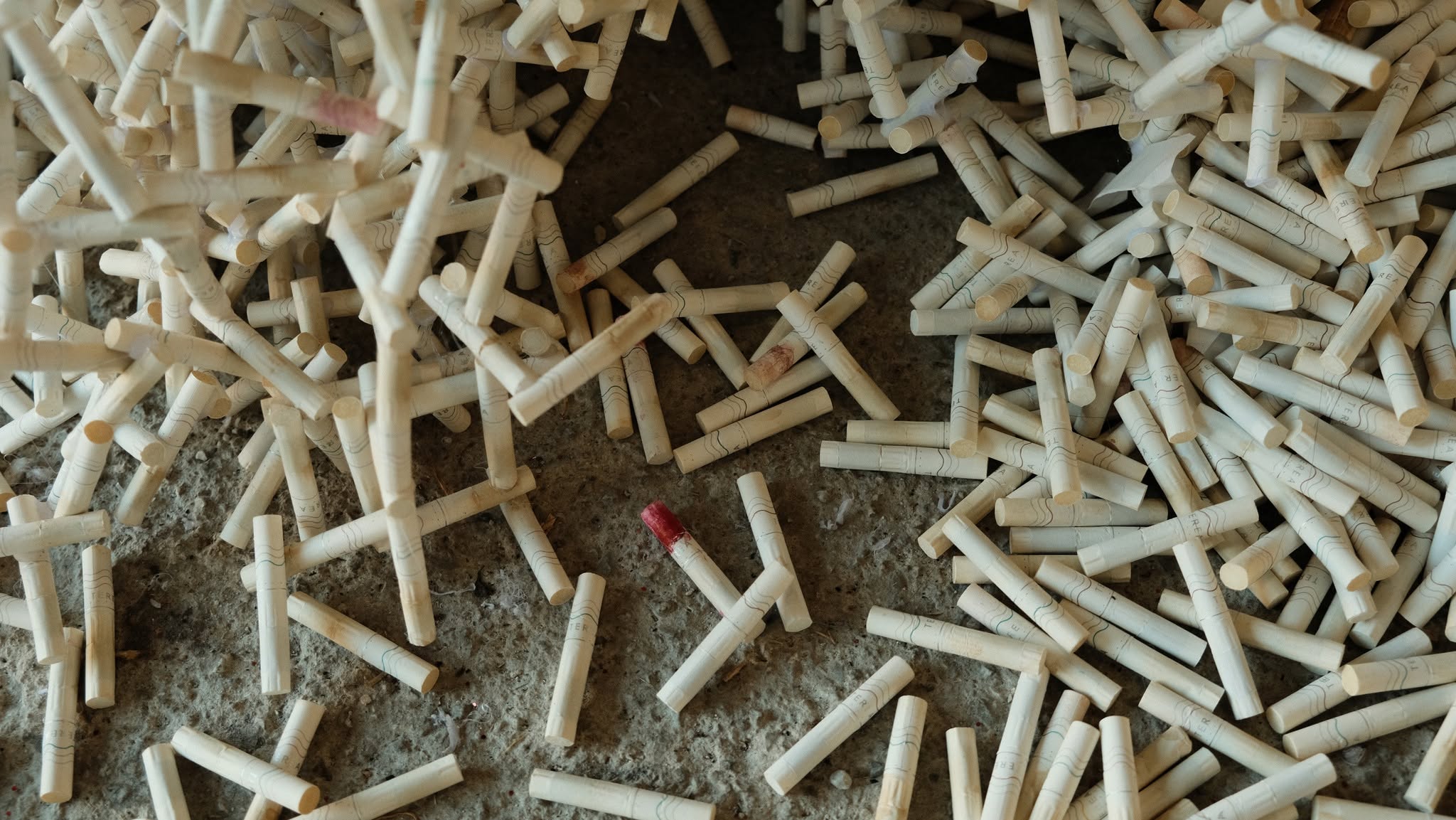
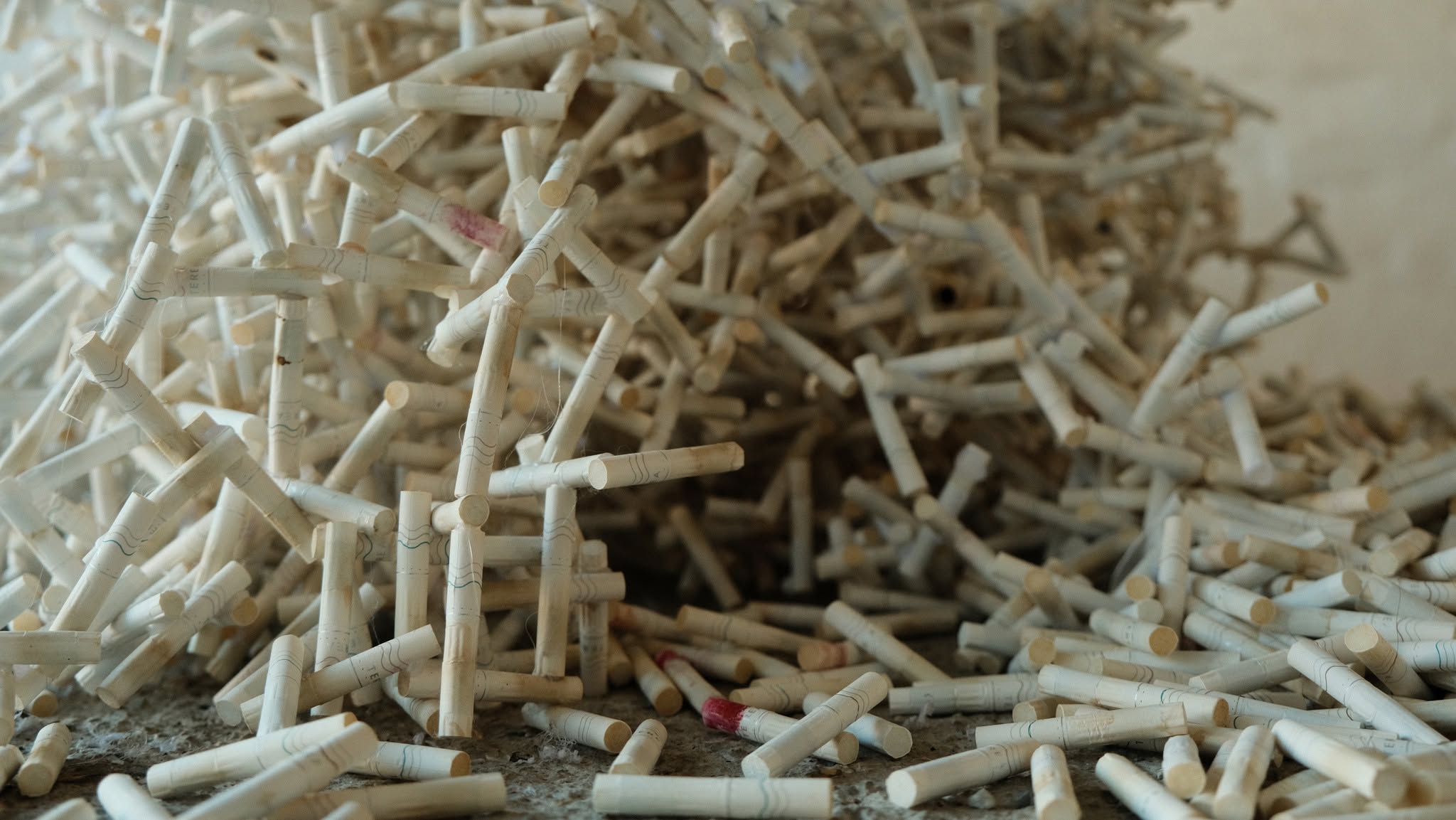
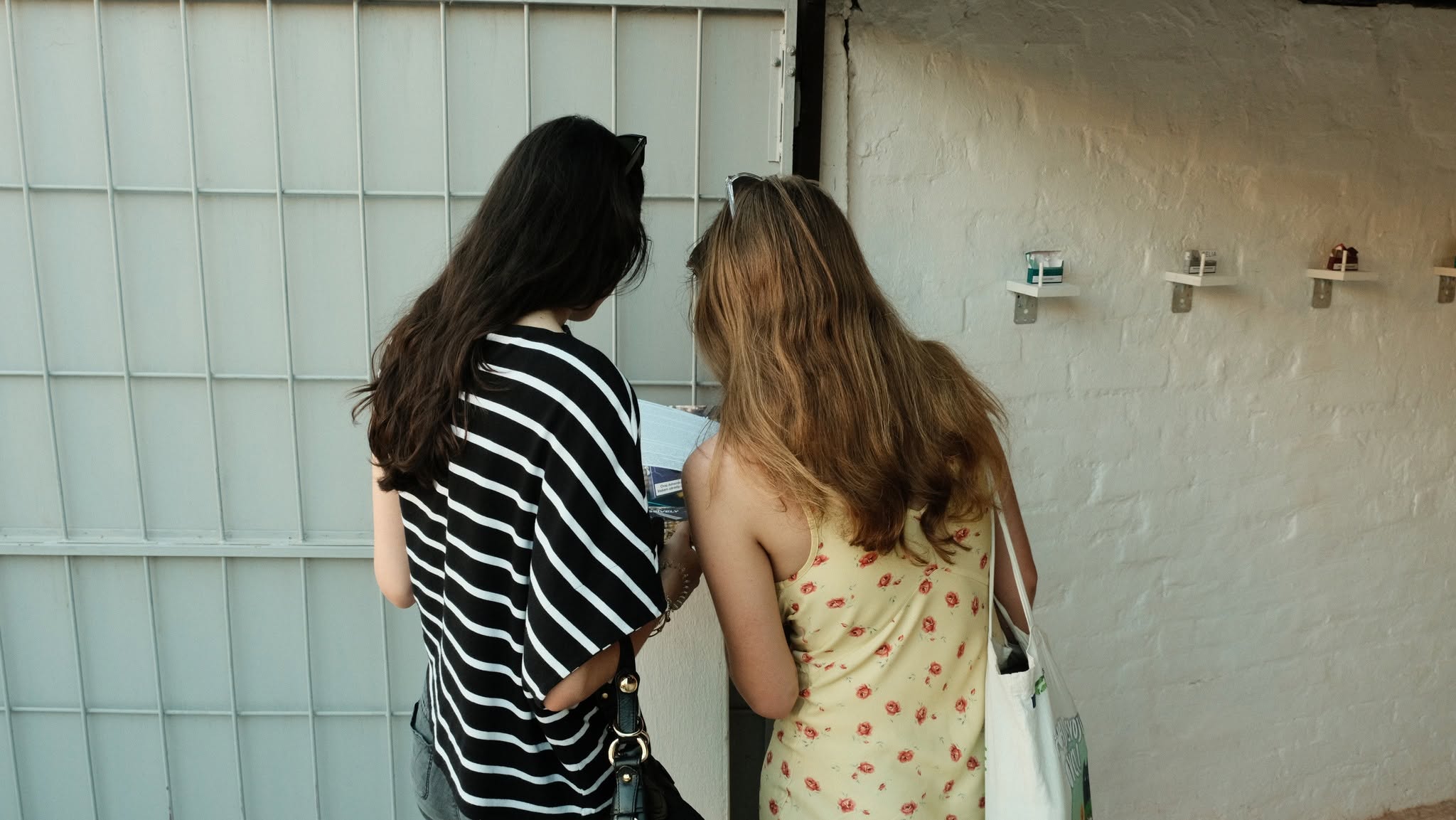
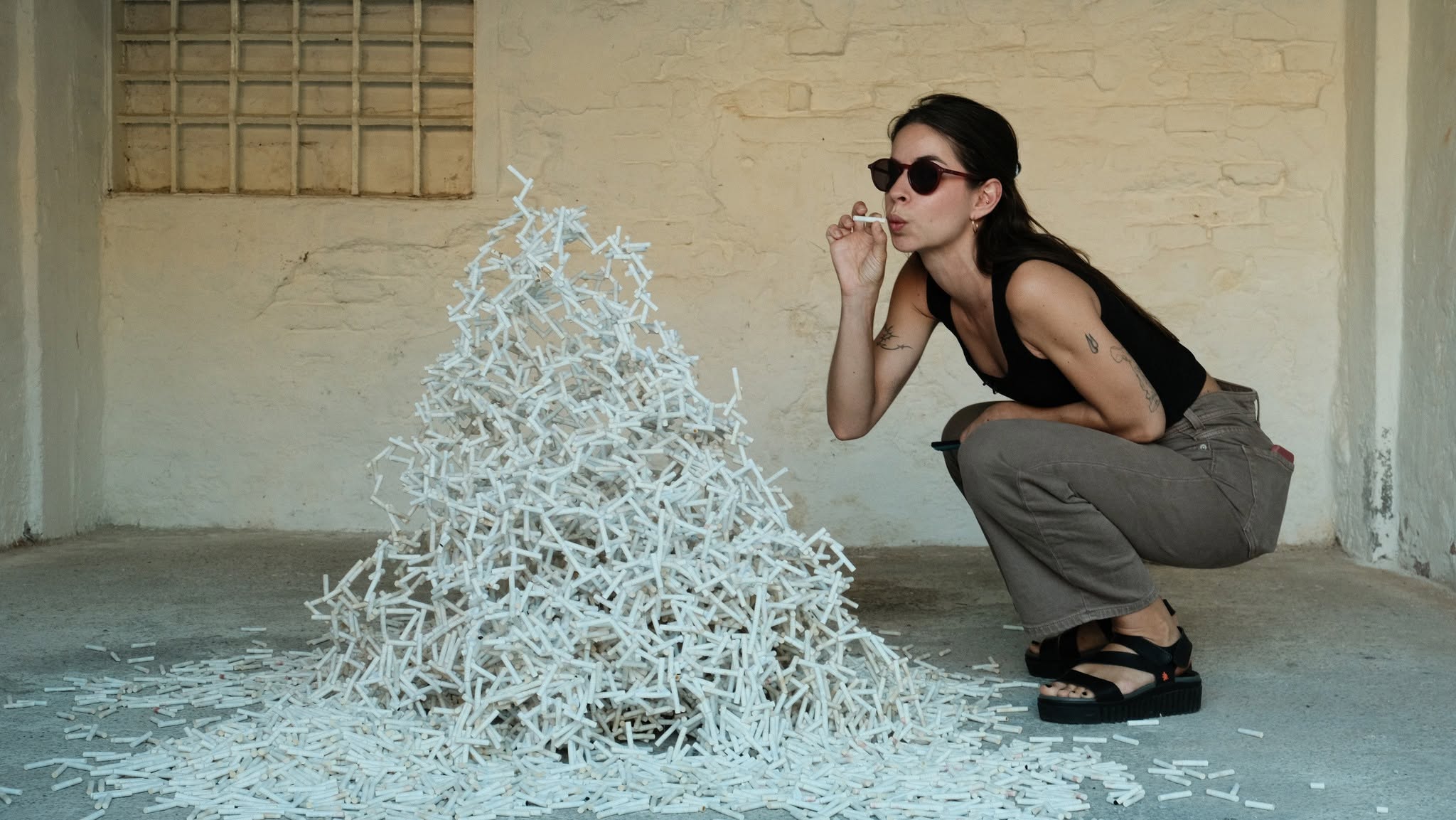
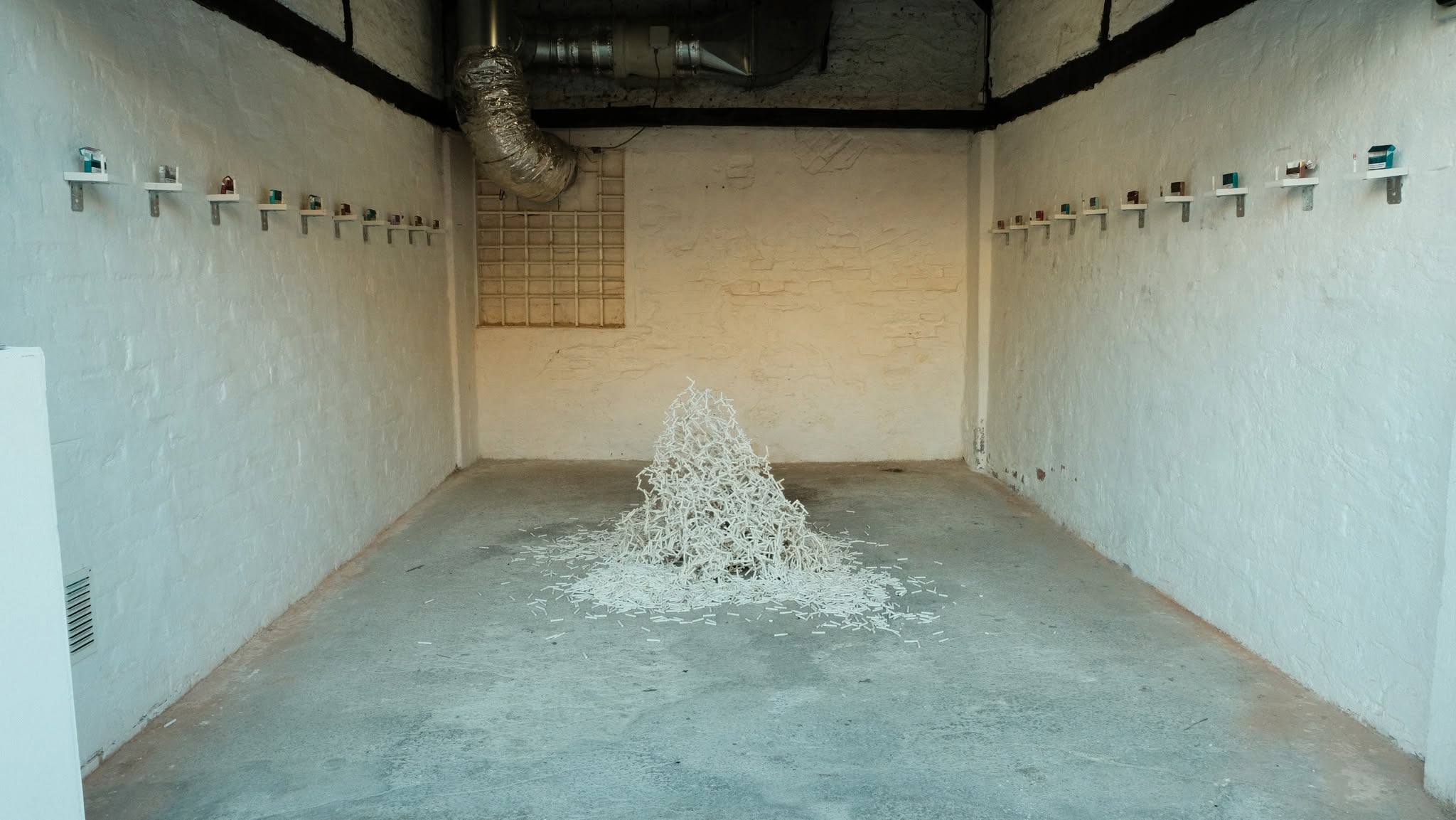
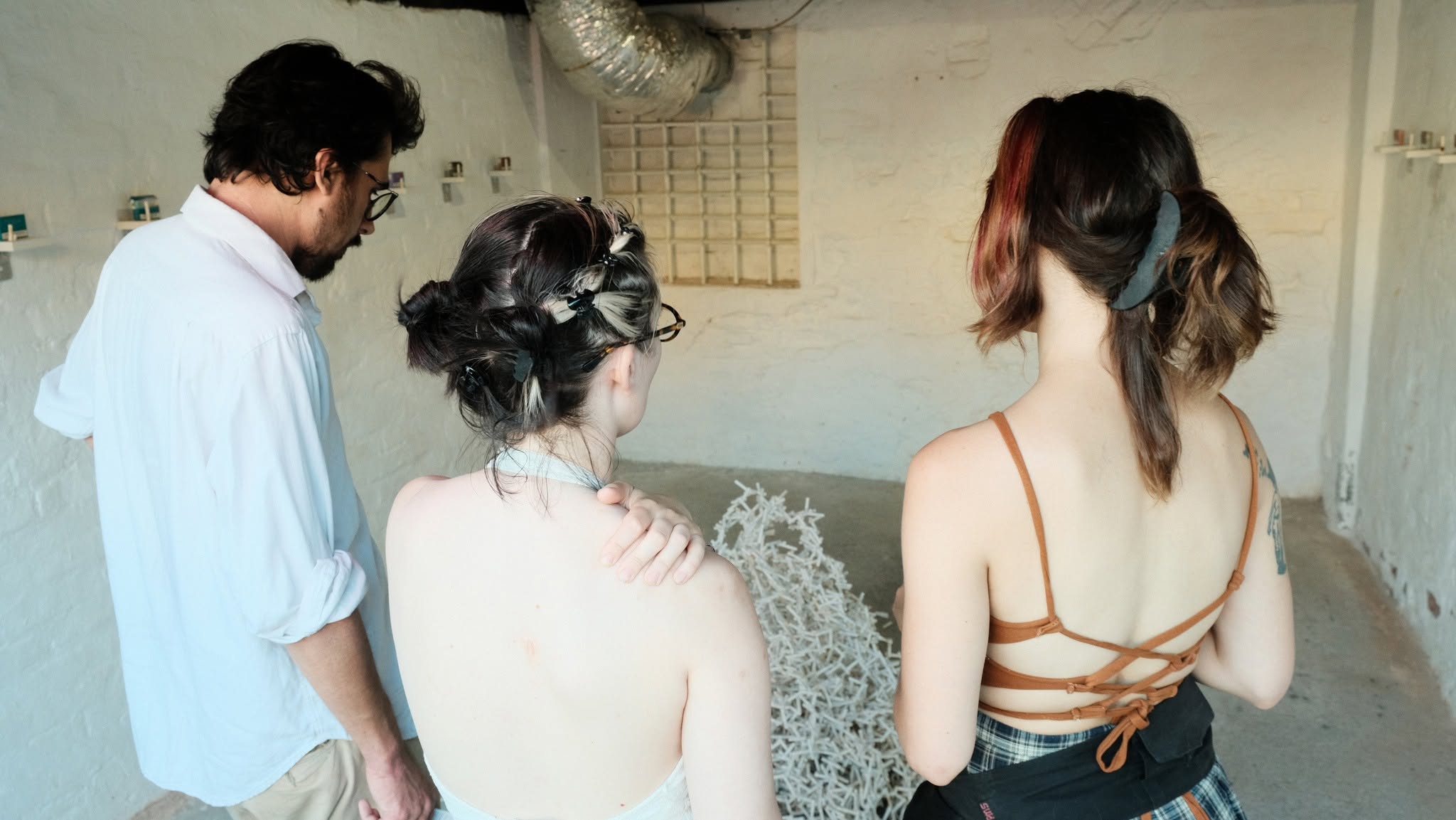
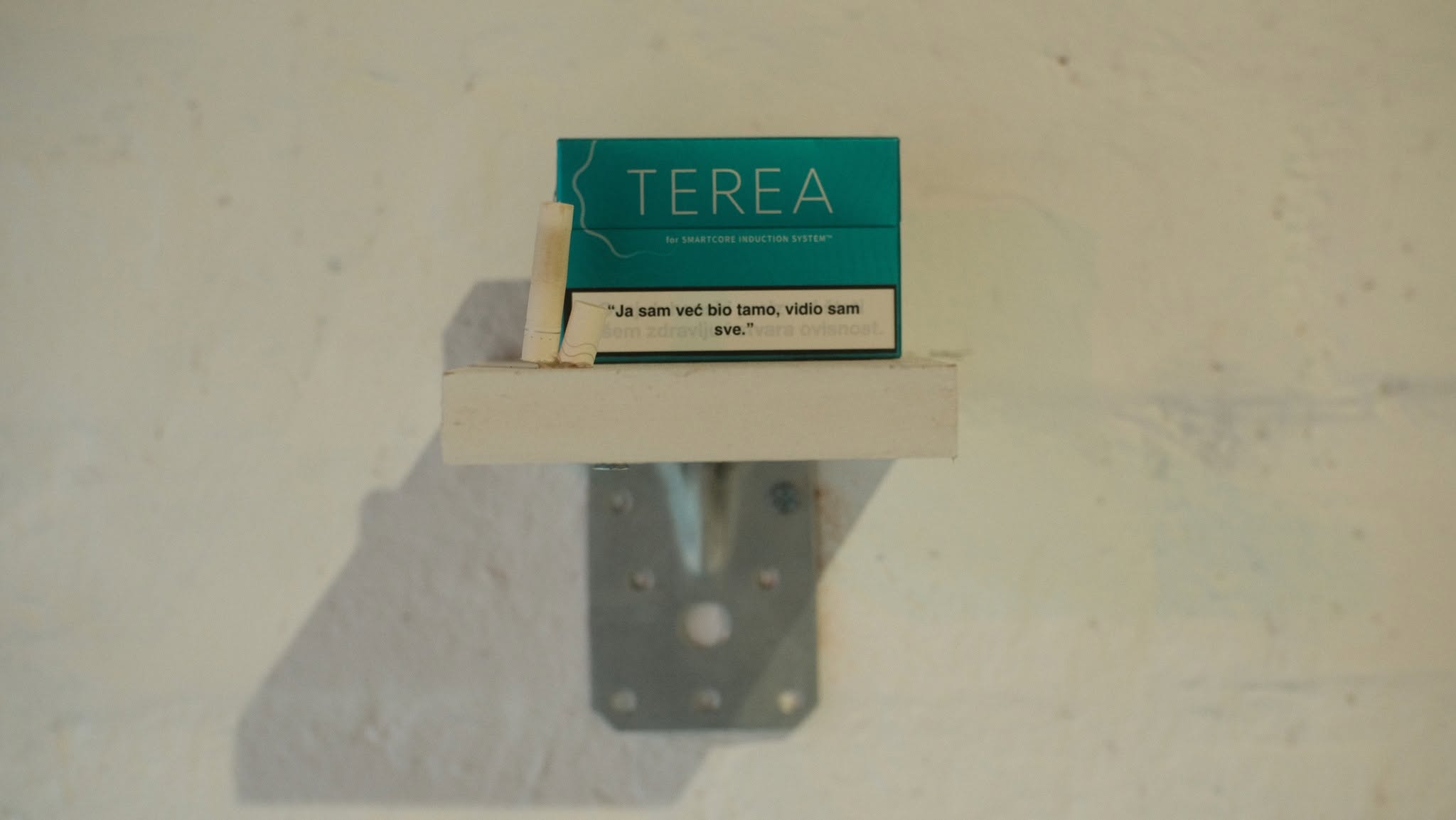
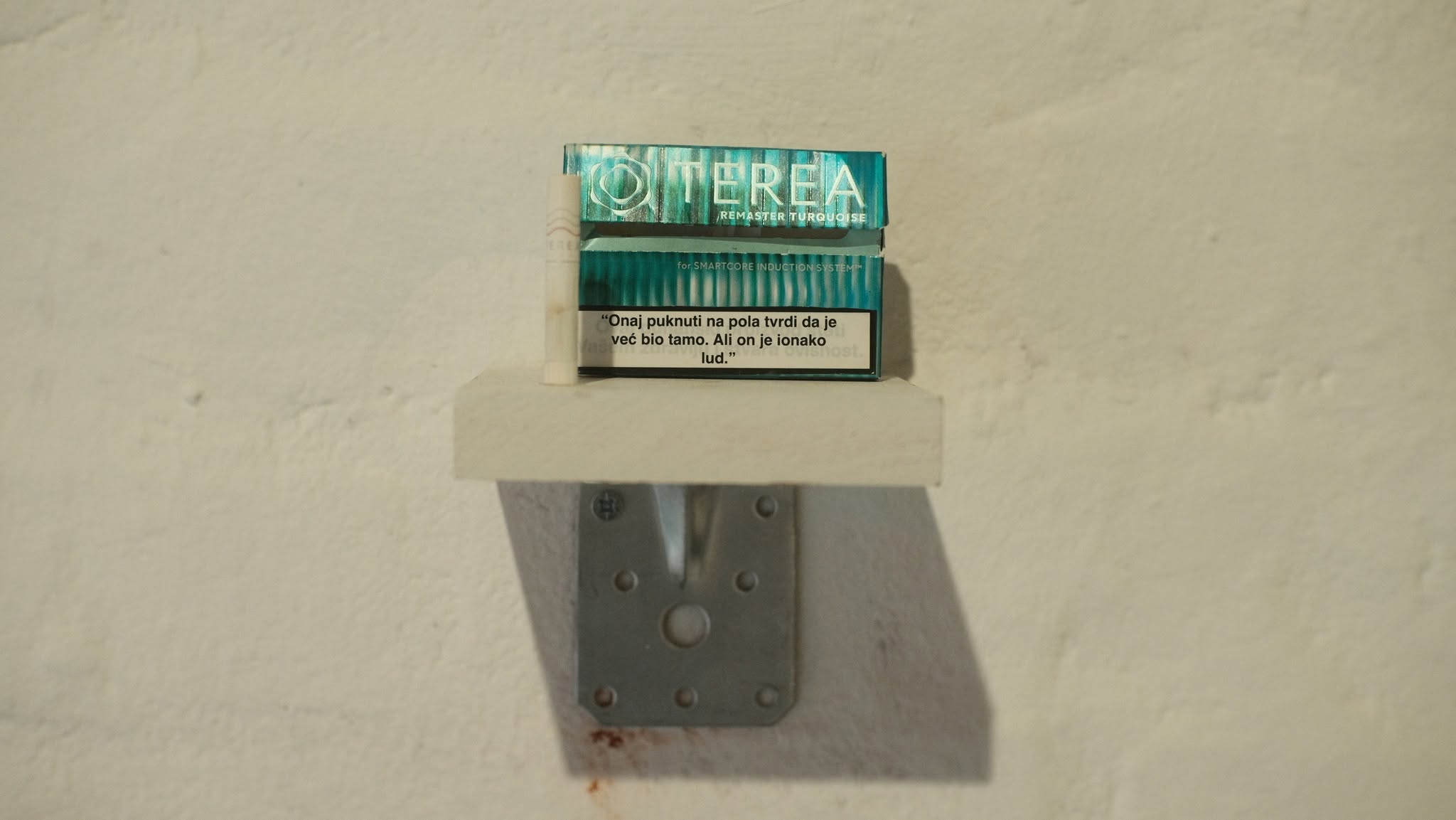
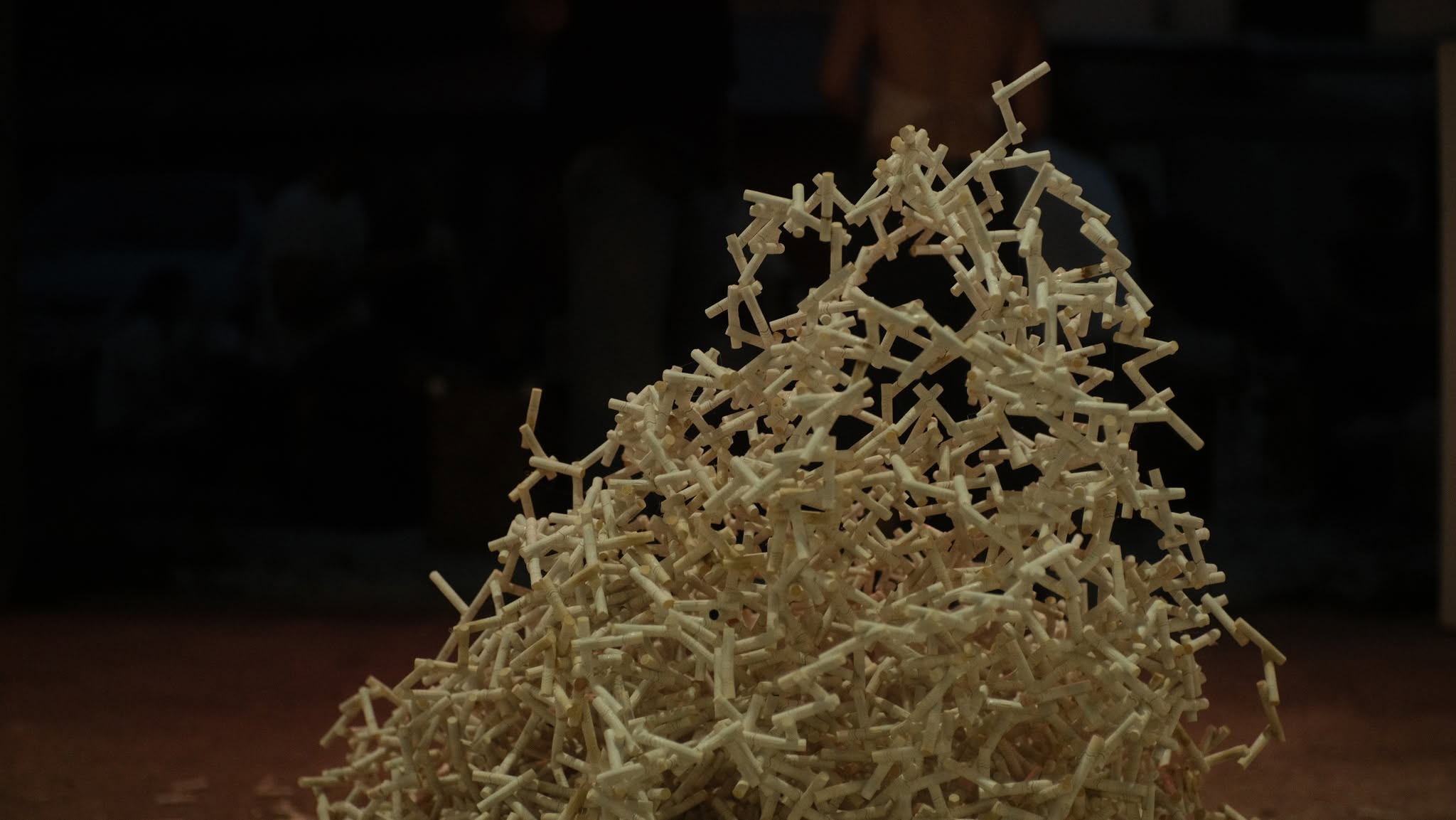
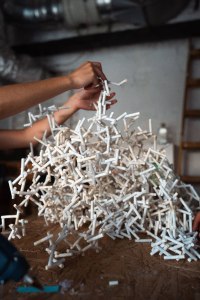
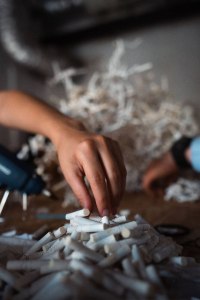
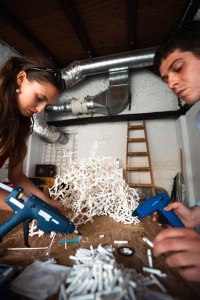
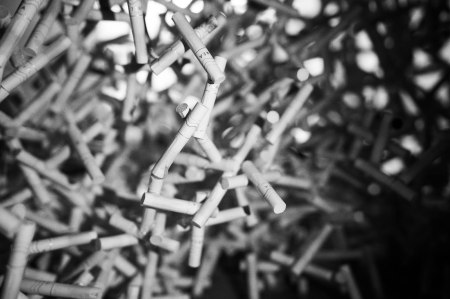
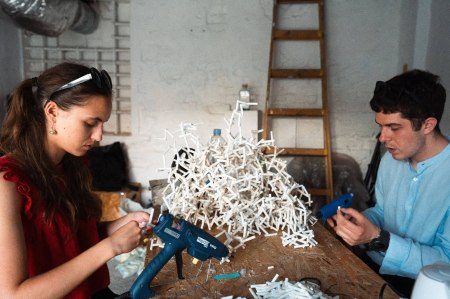
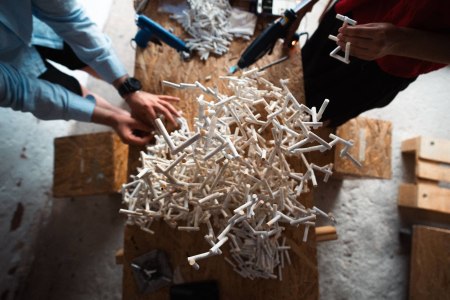
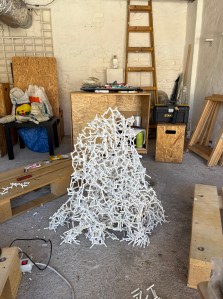
An organic installation-in-progress occupies the central space of Garaža Kamba. Composed of hundreds of used IQOS inserts joined by hot glue, it forms an amorphous body with no predetermined shape—its form dictated purely by sheer quantity and repetition. The body becomes a mass, a final destination. On the other hand, twenty small shelves distributed throughout the space hold twenty exceptions. On each shelf sits a single pack and a solitary cigarette butt beside it. Each has its own distinct characteristics—some bear traces of lipstick, some are snapped in half, while others are stained with a yellowish fluid. They still retain a semblance of individuality, which will eventually dissolve when they, too, become part of the central amorphous mass. The artist co-opts the very black frames usually reserved for ominous health warnings and fills them with banal human statements, anthropomorphizing these industrially designed cigarette butts and creating a new mythology of what follows at the scene of the crime.
The butts, along with the thoughts generated just moments before entering the Sculpture, remain individuals for a brief moment longer. They still harbor theories, fears, and expectations that will vanish upon entering the structure. There, they will lose their identity, assimilate, cease to be one, and become—nothing. The sculpture is neither a graveyard nor a paradise. It is a state of being—a doctor’s waiting room, a crowded tram, a grocery store queue, a “serious” job. And Ida? She becomes an inscrutable mythological being, a giant collecting and shaping them in a way that is incomprehensible to them (and for reasons that were initially incomprehensible to her as well). Gazing at the exceptions on the shelves in their state of waiting, we might catch a glimpse of our own position in society before life hurls us into some new, vast, and incomprehensible mass. Where are we going? We do not know, but at the very least, let’s hope they recycle there.
1 IQOS stands for “I Quit Original Smoking”. As she notes herself, she hasn’t quit a thing.



IMPRESSUM
Artist: Ida Mihaica Text: Lana Udovičić
Photography: Franka Puharić
Support: “Kultura nova” Foundation, Ministry of Culture and Media of the Republic of Croatia, City of Zagreb
Sponsored by: Medvedgrad Brewery
Biography
Ida Mihaica is a visual artist and designer whose intermediary practice spans graphic design, collage, ceramics, and spatial installations. In her work, she experiments with various materials and techniques, aiming to connect potent concepts with the medium best suited to convey their message. She is currently studying New Media Design at RIT Croatia in Zagreb. She gained professional experience in visual communications through design internships at renowned studios and agencies in Dubrovnik and Zagreb. Since 2026, she has been a member of Garaža Kamba, and she brings extensive experience in organizing and jurying cultural and film projects, including the Luža Media Culture Association, DUFF (Dubrovnik Film Festival), FMFS (Mediterranean Film Festival Split), and the Giffoni Film Festival.
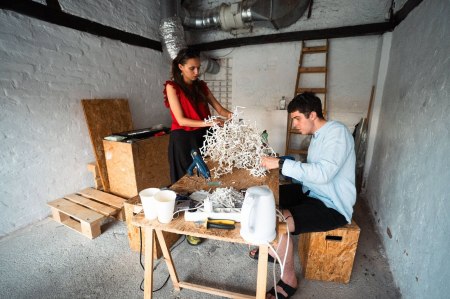
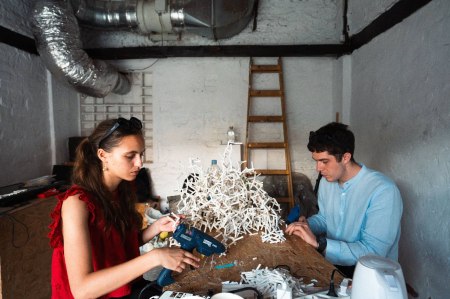
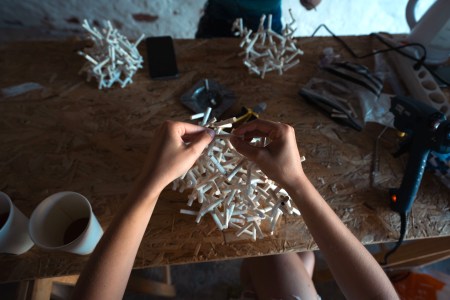
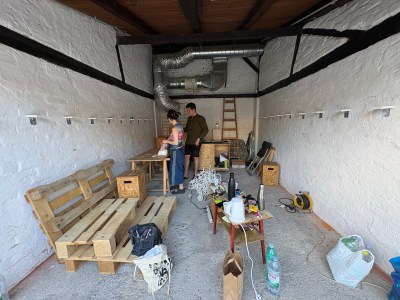
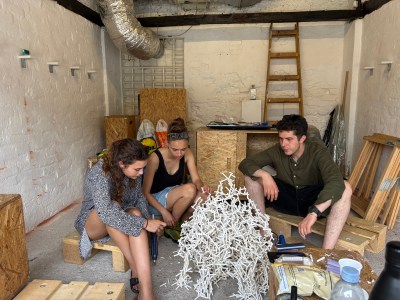
A special, heartfelt thank you to Kristijan Popović, the architect of the waiting room and master of the 20 shelves, for his selflessly given time. To our curators, Buga Kranželić—who served as the voice of reason, logistical pillar, and right hand with a hot glue gun—and Franka Puharić, for her curatorial support and logic. And to Lana Udovičić, for the text that introduced us to this chaos.
A massive thank you to the Smoker-Gatherer Collective for their selfless accumulating, pocket-archiving, and transportation of TEREA inserts:
Lukrecija Novaković, Roko Grilec, Ivan Leinweber, Cvijeto Selmani, Laura Ana Žegura, Tina Azinović, Lorena Mihaela Ćupić, Andrea Bagarić and her mom, the team from Maritimo Recycling, Tia Dizdarević, Sofia Matković, Kiara Tenžera, Karla Tolić, Ivor Brkić, Leona Mandić, Ira Butula, Una Vojvodic, Đivo Vidak, Marta Barac, Ana Baldani, Lucija Lulić, Roko Miljan Popović and his girlfriend, Antonela Djaković, Karlo Filipović, Paula Lobaš, Gabrijela Mamić, her sister, and her sister’s company : )

